A rainforest 130 million years old,
endless groves of palm trees.
A cobalt-blue night sky scattered with stars,
a mint-green sea shimmering with light.
Wild plants growing without restraint,
animals living freely among them.
December. We were deep in the damp breath of the tropics.
Under the Monsoon
Before coming to Southeast Asia, I happened to read several works of Malaysian Chinese literature. In their damp narratives were relentless storms, suffocating heat, restless emotions, and a wild vitality tangled with repression.
After a week-long journey of my own, what stayed with me most was not the dramatic rain, but the constant chorus of insects and frogs in the rainforest, animals and insects climbing through the undergrowth, and the flowers and trees encountered on Mount Kinabalu and in botanical gardens.
Naturally, the perspectives of travelers and residents are never the same. Yet the sense of fragmentation and the overwhelming vitality of nature seem to transcend time and space, offering themselves equally to all. The leaves scattered throughout this journey felt like the best metaphor: flora and fauna form the veins, human culture weaves the surface, and sudden shocks leave behind mottled brown scars along the edges.
A melancholic tropic. A rainy season that is both quiet and deafening.
And thousands of kilometers away, the world was wrapped in snow, celebrating Christmas.

The World’s Botanical Garden
Our first stop was Mount Kinabalu, early in the morning while the grass was still damp. The sacred mountain was shrouded in thick mist, allowing us only a fleeting glimpse of its green foothills. Yet the Kinabalu National Park and its botanical garden more than made up for it.
Thick-leaved rhododendrons, wild orchids, bird’s nest ferns, begonia, holly, selaginella, stone orchids with elongated stems, red-stemmed areca palms—tens of thousands of rare plants soaked in heavy, humid air, roots twisting and spreading without restraint.
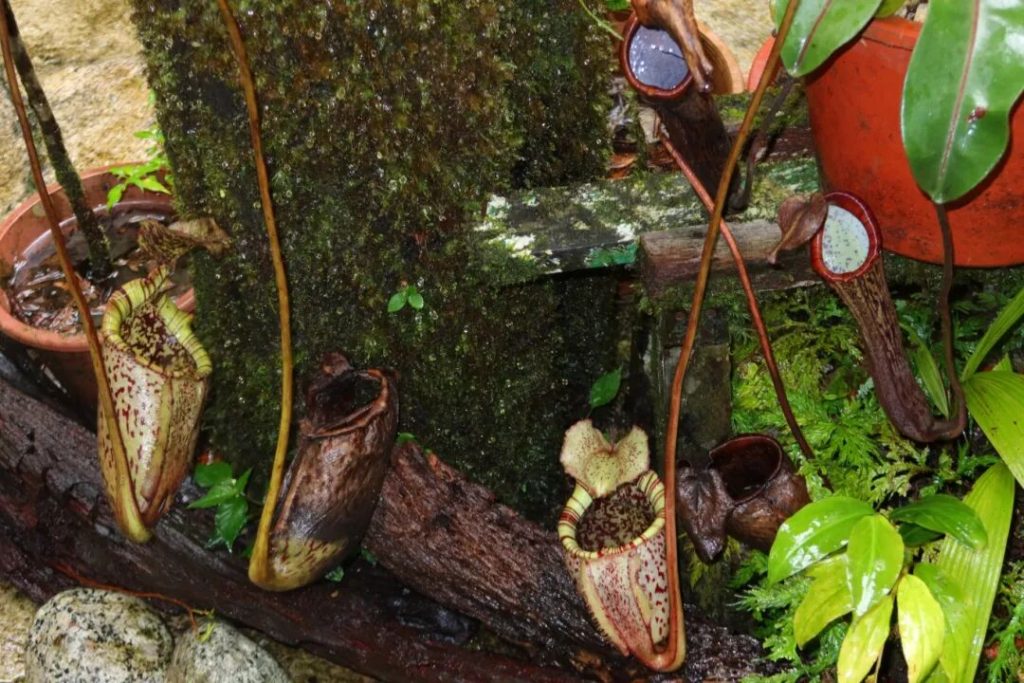
Deeper inside were pitcher plants in astonishing variety, rare rhododendrons, mosses and ferns clinging to tree trunks, branches curling and spiraling, and countless strange and unfamiliar plants.
Fed by the southwest monsoon and a subtropical climate, this rainforest never lacks moisture, sunlight, or nutrients. Life here grows wildly, almost arrogantly alive.
Halfway through the visit, a sudden shower broke out. As raindrops bounced sharply off the ground, humans scrambled for umbrellas while plants drank with practiced ease. Mount Kinabalu offered us surprise after surprise. When we descended in the afternoon, cool air rushed into our bodies, and the lingering moisture in the air curled the postcards we had just bought. Reluctantly, we departed, bidding farewell to this tropical kingdom of plants.
The Order of Breathing
The symbol of the Sepilok Rainforest Discovery Centre is a dipterocarp seed—its shape uncannily identical to the Golden Snitch from Harry Potter.
Towering trees form the most basic structure of the rainforest. Hundreds of species from the Dipterocarpaceae family survive here, in one of the world’s oldest tropical rainforests. When they reach maturity, their seeds—shaped like wings—spin and glide through the air, carried by wind and height to disperse far from the parent tree.
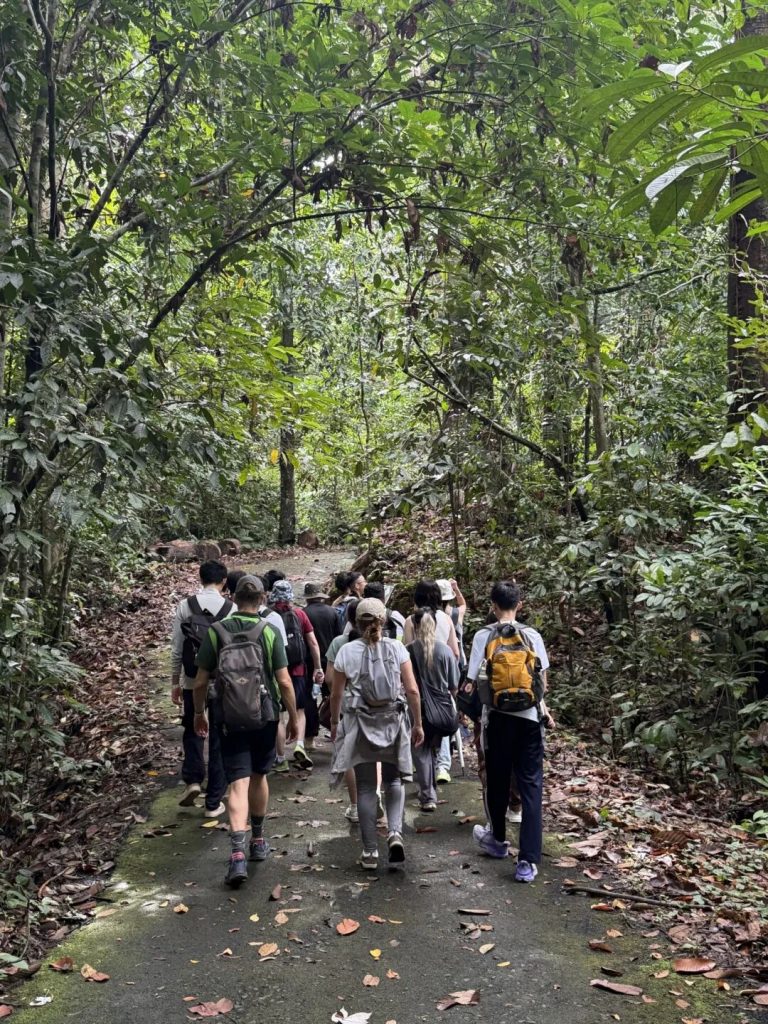
Beneath the layered canopy, epiphytic ferns cling to trunks, vines twist tightly around one another in competition for light, wild boars leave traces of their foraging, and even fallen logs host columns of marching ants. Life in the rainforest is vertical: from the treetops to the forest floor, every layer is alive.
To move through such an ancient forest, we relied on canopy walkways suspended nearly twenty-five meters above the ground. We crossed swaying wooden bridges over still lakes, legs growing heavier with every step. Along the walkway stood birdwatching towers, each requiring a climb up narrow spiral stair. At the top, we widened our eyes and held our breath. At dusk, we saw a flying squirrel glide silently through the air, disappearing into the trees amid a burst of whispered astonishment.
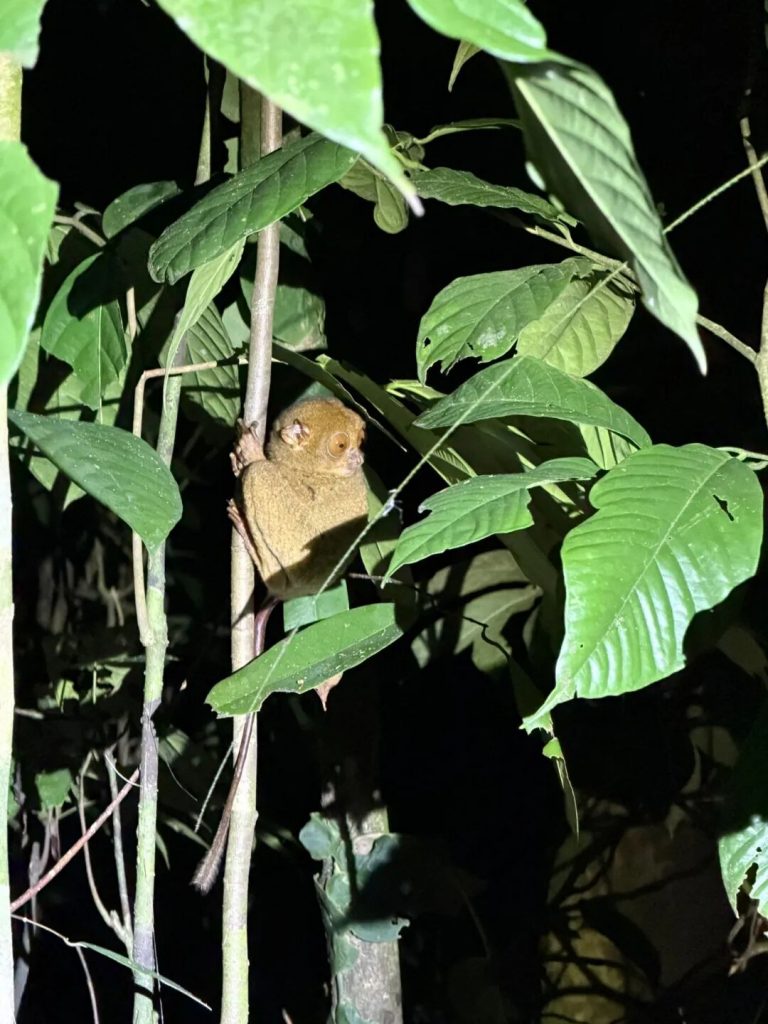
By day, we wandered these paths watching orangutans and sun bears. Yet it was the rainforest at night that stirred something deeper. As darkness fell, the ground trails grew dim—sometimes so dark that even outstretched hands vanished from sight. Despite our exhaustion, we switched on our flashlights and followed guides who scanned the forest with red light, careful and patient. Before long, luck found us.
Led through dense undergrowth, accompanied by the steady chorus of frogs, we came face to face with a tarsier, clinging tightly to a branch.
Later, there were millipedes that released fragrance when gently rubbed, giant-eared tree frogs motionless on rocks, and countless insects, amphibians, and reptiles awakening under cover of night. Another world had quietly come alive.
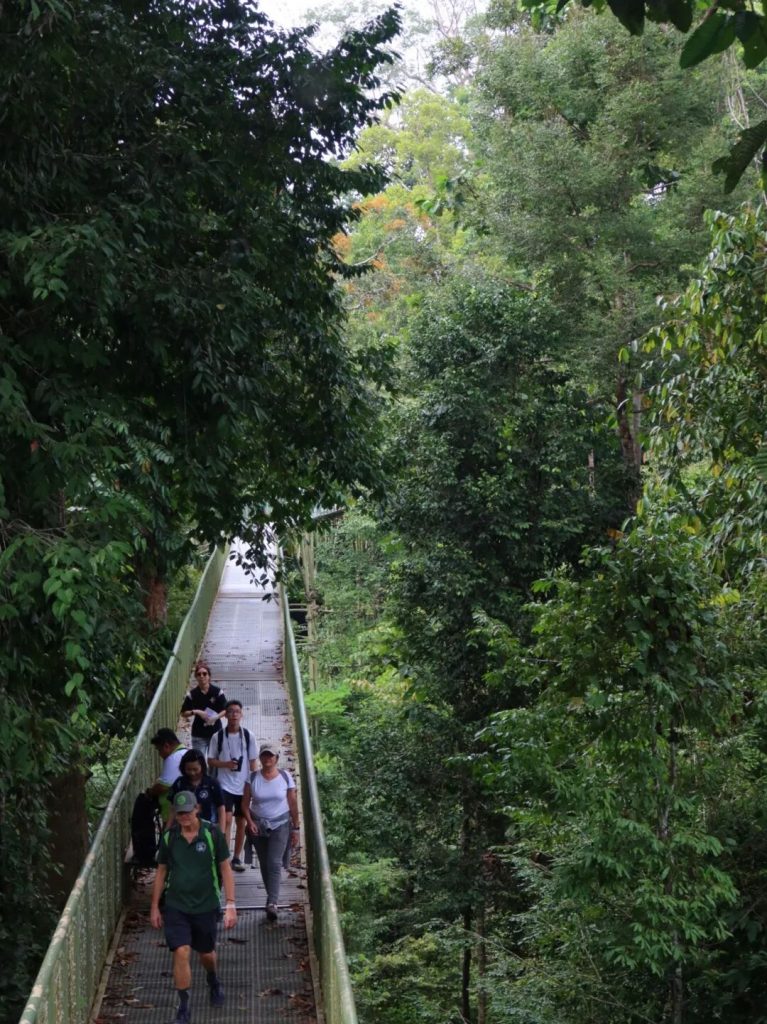
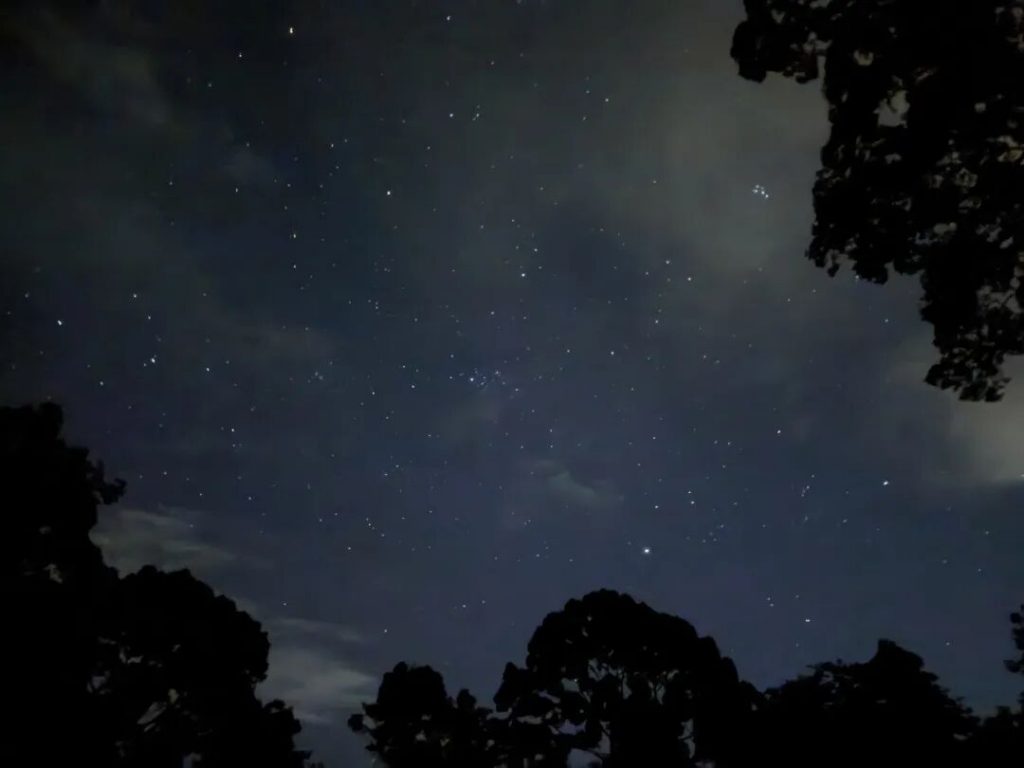
At the end of the day, we returned once more to the suspended canopy walkway. Stars began to gather overhead, and the rainforest slowly grew still—still to an almost unsettling degree. Apart from the distant hum of insects, the only sound left was the heavy echo of our own footsteps on the steel walkway.
The world fell quiet, until only the rainforest’s breathing remained.
As the Milky Way filled our vision, the edges of sight dissolved into towering trees and uneven shadows. Looking up into the night sky, the scale of heaven and earth felt overwhelming, and humanity—suddenly insignificant.
It was late December. Final exams had just ended. The emotional strain of application season, the weight of coursework, the quiet accumulation of anxiety and exhaustion—all of it seemed to burn away beneath the stars. Is not human life itself a single breath, lasting less than a century? And this rainforest has been breathing here for 130 million years—how many long inhalations and exhalations does that contain?
“We swallow too much meaning, while life needs only to breathe.”
So I closed my eyes and followed the order of breathing.
Great Beings
In the documentary The Land of the Spirits, a line I love says:
“In nature, every species has its place. These apex creatures are the most delicate designs of each land. Once totems of civilization, their breathing and heartbeats carry the messages of heaven and earth.”
Sabah is a paradise for primates and birds. On this land, animals are as essential to Borneo as its lush vegetation.
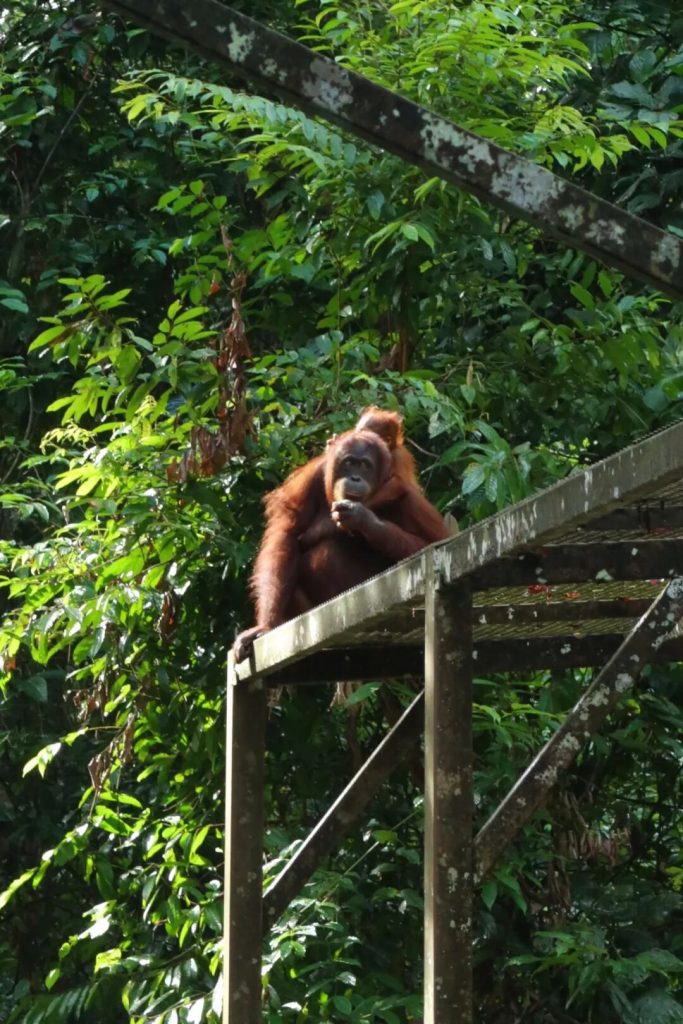
Our first focus was the Bornean orangutan, sharing 97 percent of human DNA. At the feeding platform, we watched a mother carrying her infant crawl above our heads, and witnessed orangutans chasing pig-tailed macaques away from food.
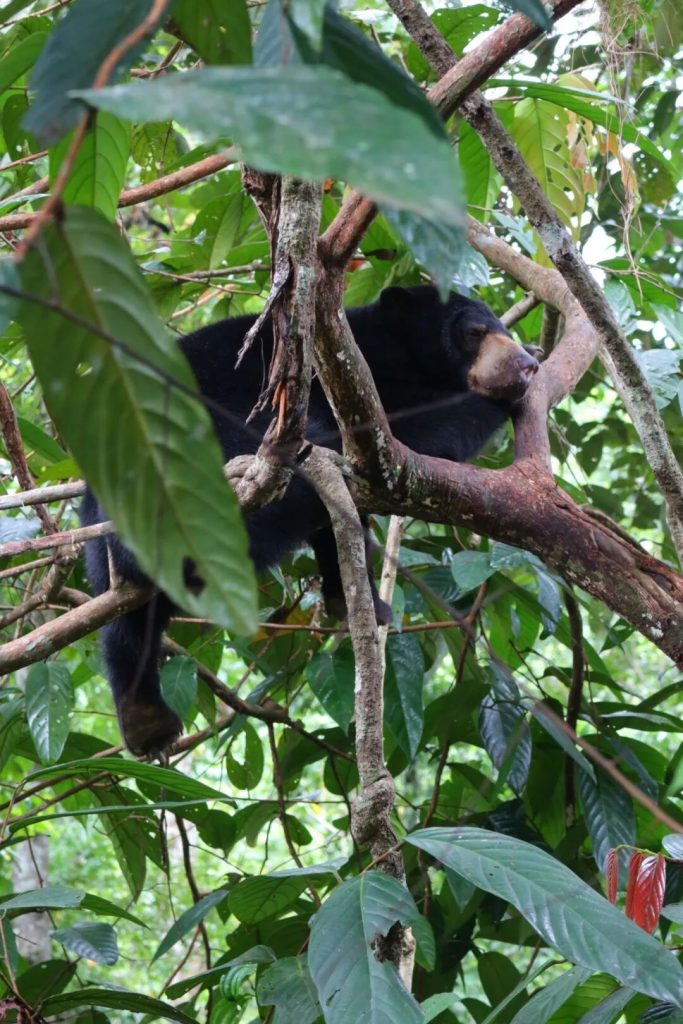
At the rehabilitation center, dramatic battles between orangutans unfolded along ropes outside the glass walls. In contrast, sun bears were shy and quiet—sleeping lazily in trees, foraging slowly on the ground, then disappearing silently into the forest.
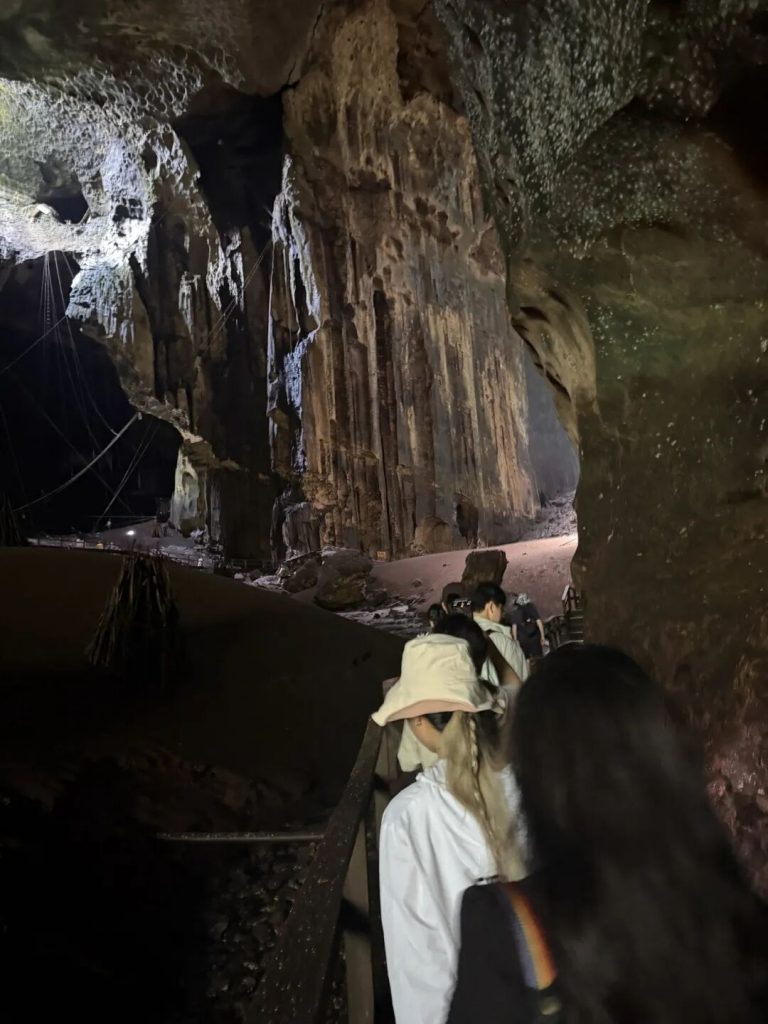
The next day began at Gomantong Cave, home to countless swiftlets and bats and one of the world’s top producers of natural bird’s nests—after this visit, I doubt I will ever eat bird’s nest again. At the entrance, hibiscus flowers swayed gently in the breeze, giving no hint of what lay ahead. Inside, unlit wooden walkways were dark and slippery; cold droplets from stalactites fell without warning; bat droppings covered the cave floor. Every step demanded caution.
In open areas enclosed by the walkways, tiny blue lights sparkled like gems—only to reveal themselves as cockroaches feeding on guano. They crawled calmly past our feet and hands, leaving only human screams behind.
We arrived too early to witness the full spectacle—at dusk, millions of bats would pour out to feed, forming vast waves in the sky, while swiftlets returned home, the two species exchanging the cave in endless motion. Suddenly, the cave’s environment felt almost reasonable—though less so for unprepared visitors like us, each of whom breathed a sigh of relief upon exiting.
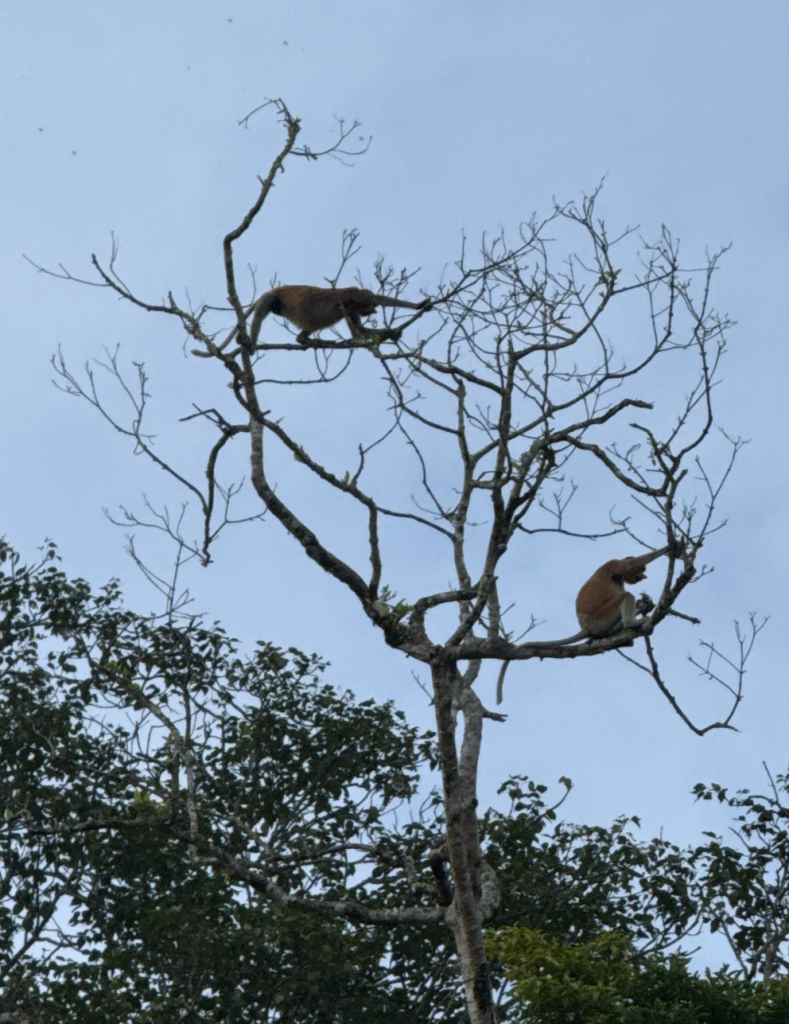
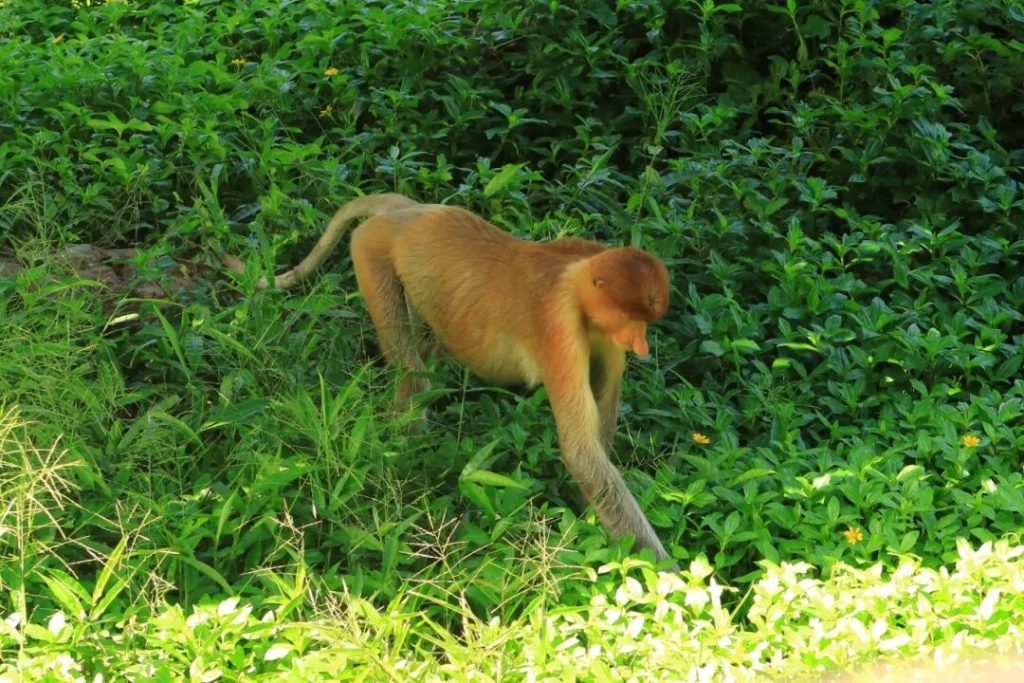
After the most terrifying experience of the trip, we rested before heading to the Kinabatangan River at dusk. Rain began again as our boat departed, dark clouds signaling an approaching storm. Hearing that animals were less active in rain, I put my camera away and drifted toward sleep amid the smell of diesel. Miraculously, the sky cleared. We saw silvery lutung feeding, a saltwater crocodile’s head breaking the surface,crab-eating macaque swinging through trees, and later, an entire tree crowded with guenons as white water splashed against the boat.
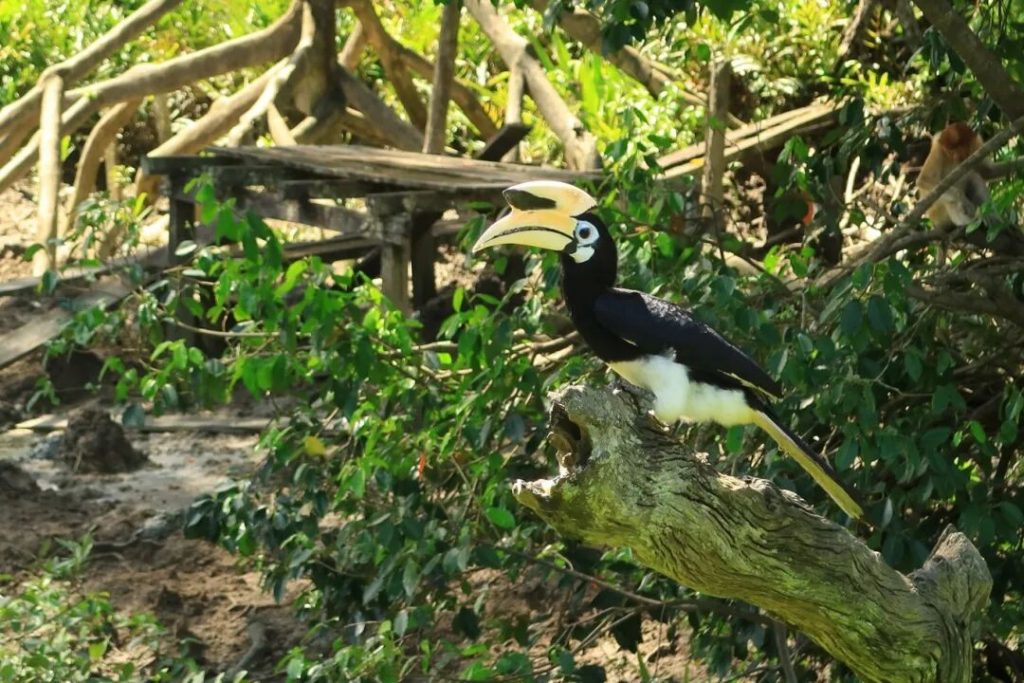
As we returned at sunset, cold wind struck our faces. The river glowed with rippling gold. Hornbills and kingfishers darted along the banks, and a pair of rhinoceros hornbills perched atop a dead tree alongside maroon leaf monkey monkeys. Together, we watched the Kinabatangan evening fade.
Scars
At the end of the journey, we returned to Kota Kinabalu and boarded a speedboat out to sea. At a suitable spot, we slipped into the water to snorkel. Clownfish sheltered among sea anemones, unfamiliar fish drifted past, and together with the coral reefs they formed a dazzling underwater world. The clarity of the water was irresistible. Even as seawater repeatedly flooded our throats with salt, even as ultraviolet light burned our skin, we stayed on.
Back at the hotel, I discovered the price I had paid—both shoulders scorched red, the pain lingering for days. Even now, more than a month later, the marks remain, darkened patches of skin that refuse to fade.
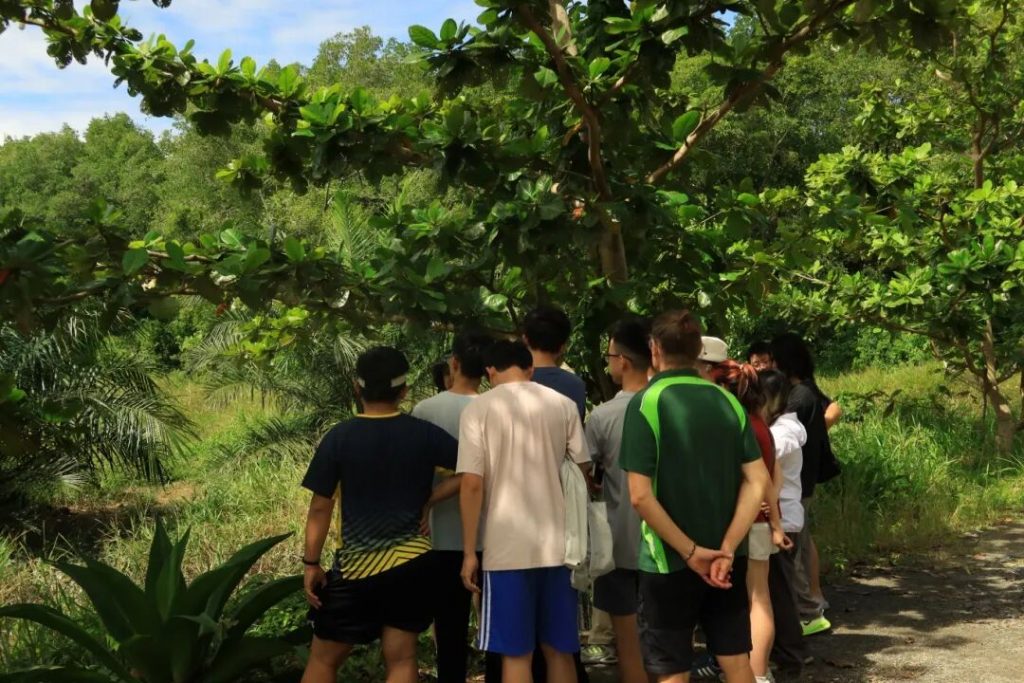
After the Rain
From Kota Kinabalu to Sandakan, we swayed on buses through the rain. Green blurred past the windows, lulling us into sleep, broken only by the jolts of mountain roads.
My camera holds many images: shades of green at different stages of life, banana trees and palms, reeds swaying in evening wind, smoke rising at riverbanks, laughing children, insect calls, and star-filled skies. Before arriving, I worried the rainy season would hinder travel. In the end, we encountered only a few storms—sudden, overwhelming, and unforgettable.
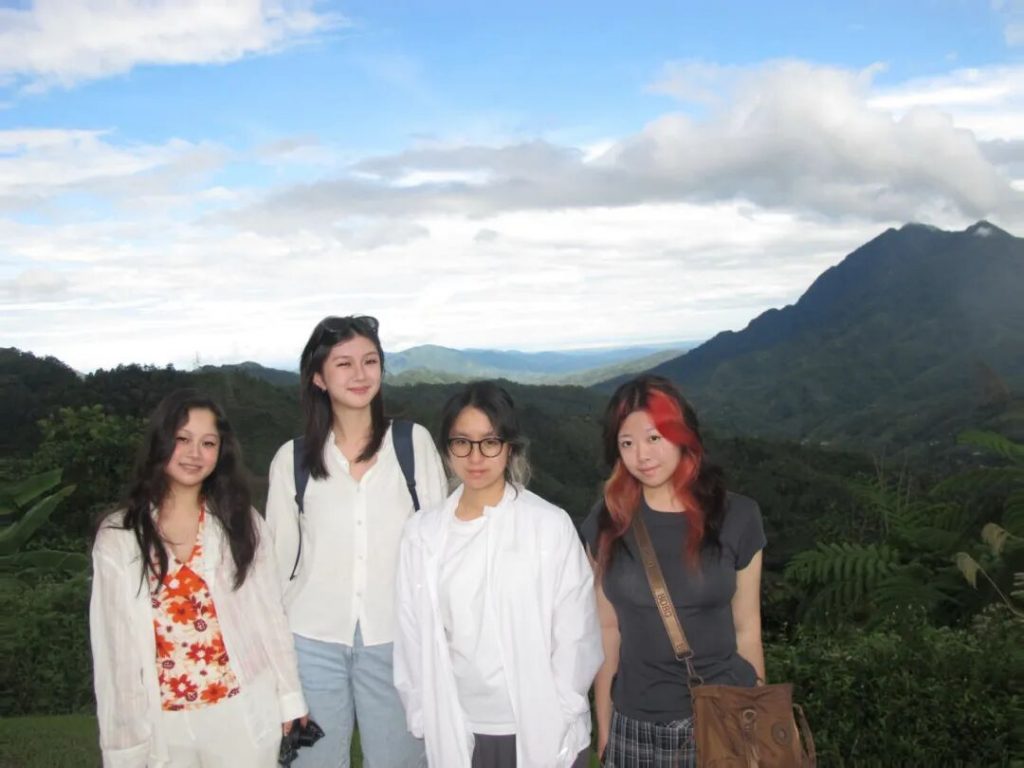
Every day in Borneo was a pursuit: wandering rainforests and villages, climbing steep slopes to hidden dams, trekking through caves, walking through rain and mist. Searching for rare animals and birds, questioning savagery and civilization. Clothes soaked through, trouser legs clinging to calves. Rain roared like ocean waves, wrapping everything in a dream.
We ate. We slept. We boarded the flight home.Tomorrow, it will still be summer.
- Article / Dalros Wang
- Pictures / Geography Field Trip Group