Leave It to Fate
When playing the Super Body mode in Game For Peace, the plugin I choose most often is called “Leave It to Fate”—the system randomly assigns power-ups, so I don’t have to agonize over it. When I’m standing on the first floor of the Yinli Center, hesitating between going to Gaga or pLeace, I’ll open WeChat and roll the dice: 1, 3, or 5 means Gaga; 2, 4, or 6 means pLeace. I don’t like making decisions and don’t want to stress myself out, so I use this simple, no-nonsense approach.
I guess that’s just the kind of person I am—I don’t have a clear destination. It’s like riding the subway: whichever stop I get off at is my final destination.
Applying to SCIE was also a spur-of-the-moment decision. I didn’t prepare much; I figured if I got in, I’d go, and if not, it wouldn’t matter. So I just went for it—and I got in.
Finding My Path
I’m not the kind of person with a clear-cut goal. Astronomy, engineering, math, business—my interests are like a curve wildly testing the boundaries of its domain. I first got hooked on astronomy after reading DK encyclopedias; in 10th grade, my passion for Formula 1 made me want to study racing engineering; in 11th grade, I fell in love with the purity of math and decided to major in it—but ended up at LSE, a top school for economics and social sciences. To this day, I’m still wondering what I truly love—what I’m willing to dedicate my whole life to.
In the end, I chose math—what I love most right now. I love math not because I’m good at taking tests. Back in public high school, I rarely managed to solve the final problems on math exams. But I love that feeling—after being stuck for a long time, suddenly seeing a path I hadn’t considered, then following it, step by step, until it all clicks. Those moments are rare, but every time one happens, you feel that the hour you spent staring into space was worth it.
While preparing for the STEP exam, I often thought back to those moments of “realization.” But the STEP is a bit different; it doesn’t give you many opportunities for “eureka” moments—the smaller sub-questions at the beginning guide you step by step, as if saying, “Try this first, then try that.” Most of the time, you’re just going in circles, occasionally taking a small step forward, until one question ties everything that came before together. When you reach the end of the path it has laid out and look back, you realize just how far you’ve come. I love that feeling—even if I don’t make it to the end, at least I know what that path looks like.
I used to think being unable to solve difficult problems proved I wasn’t “smart enough.” Later, I came to accept that liking math and being good at solving difficult problems are two entirely different things.
Walk with Me
If you asked me what I’ll miss most about SCIE, I’d say it’s definitely my friends. The people who know exactly what I’m going to say the moment I open my mouth, the people who get my inside jokes instantly. I miss the karaoke sessions that would start the moment my alarm woke me up at noon, even when I was still half-asleep; I miss their spot-on, “biting” comments that cut right to the heart of my worries; I miss the way we’d all shout “I’m taking a shower first!” in unison the moment we walked into the dorm. They gave me a reason to laugh out loud every single day.
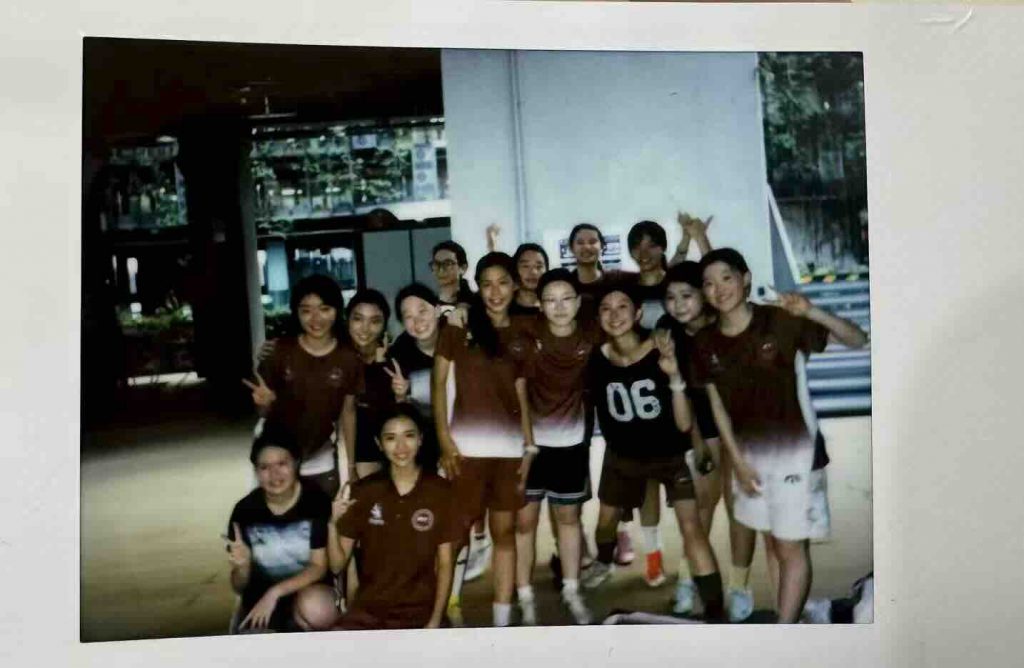
Football has always been a part of my life, too. When I first arrived at SCIE, I actually hadn’t planned on playing football. During an economics class, I noticed a classmate across from me holding a Liverpool water bottle. I asked her if she played soccer, and she said she did—there was a women’s football ECA tryout right after class. That’s how I stumbled my way onto the school’s women’s football team.
I played for two years, got a few shades darker, and ended up with a few more bruises on my feet. Football isn’t the sport I’m best at, but it’s definitely the one that brings me the most joy. Lying in bed, I thought back to the match where I received a brilliant pass from a teammate but missed a golden opportunity, and I laughed at myself.
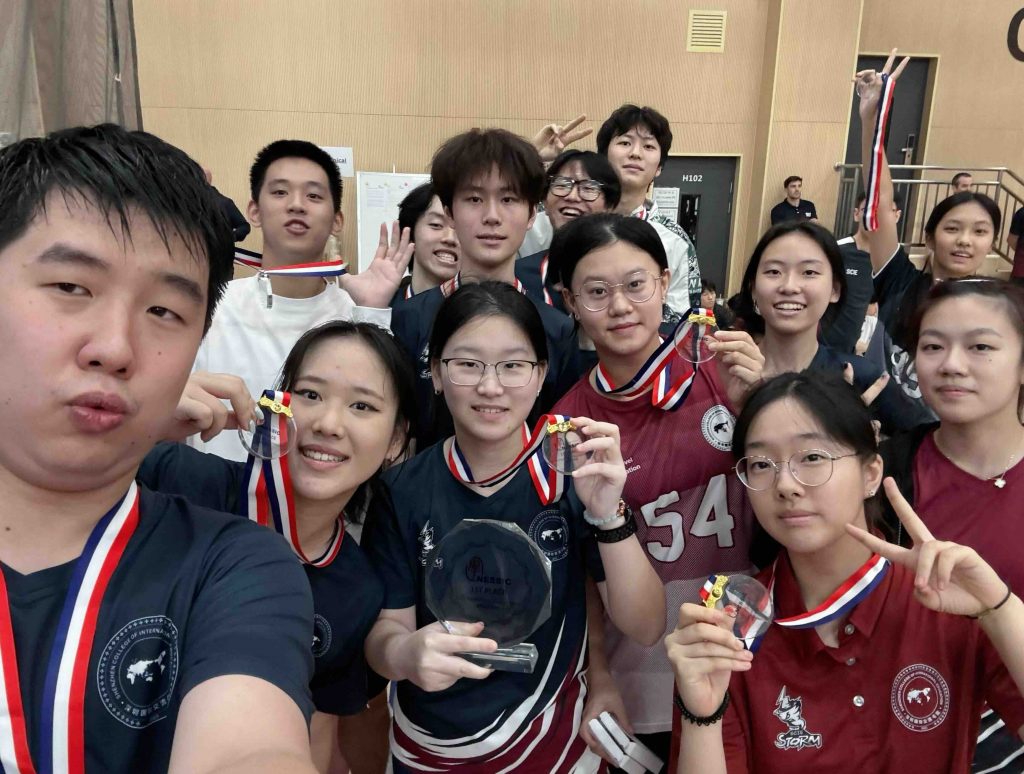
Badminton, on the other hand, helped me discover another side of myself. I used to play badminton purely for fun, not caring about winning or losing. But when I lost the women’s singles match at SISAC during my A1 year, I was overcome with disappointment and guilt for failing to score a point for the team—that’s when I realized I actually wanted to win, too. As captain in my A2 year, I returned to NESSIC and SISAC, and we finally won that long-awaited gold medal.
You Win Some, You Lose Some
The most agonizing days of my life were when my AS International Exam scores came out. I missed my predicted A* in both Further Math and Chemistry by just one point. For someone applying to a math-related major, this was practically a deal-breaker. While preparing for the exams, I always thought, “It’s good enough if I’ve reviewed most of the material”—as long as my luck wasn’t too bad, I’d get my predicted A*. But luck doesn’t always go my way.
Why not take my fate firmly into my own hands instead of gambling on probability?
When preparing for the STEP exams, I also approached them with this “good enough” mindset. I’d work on problems until the early hours of the morning, close my pen cap, thinking, “That’s good enough,” only to find that my mock exam scores still fell short. At the time, I didn’t take it seriously—after all, it was just a mock exam; I figured I’d pass the real one if I got lucky. On the day the scores were released, the numbers on the transcript calmly told me—“good enough” isn’t a strategy; it’s an escape. The STEP exam didn’t give me any surprises; it simply and faithfully reflected the fact that I was “just a little short.”
In the first few weeks of A2, I hesitated over whether to drop chemistry. In the end, I chose to continue—for the sake of my applications to U.S. universities. This decision made my A2 life very different; with 38 periods a week, I became the A2 student with the heaviest course load.
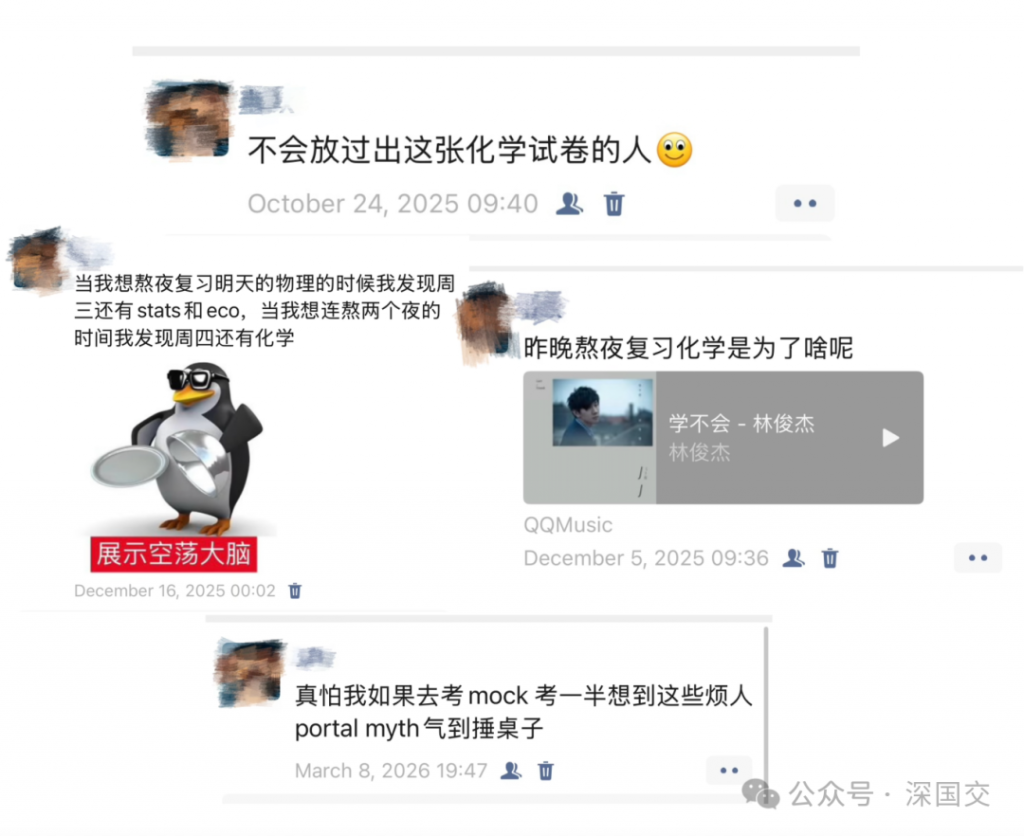
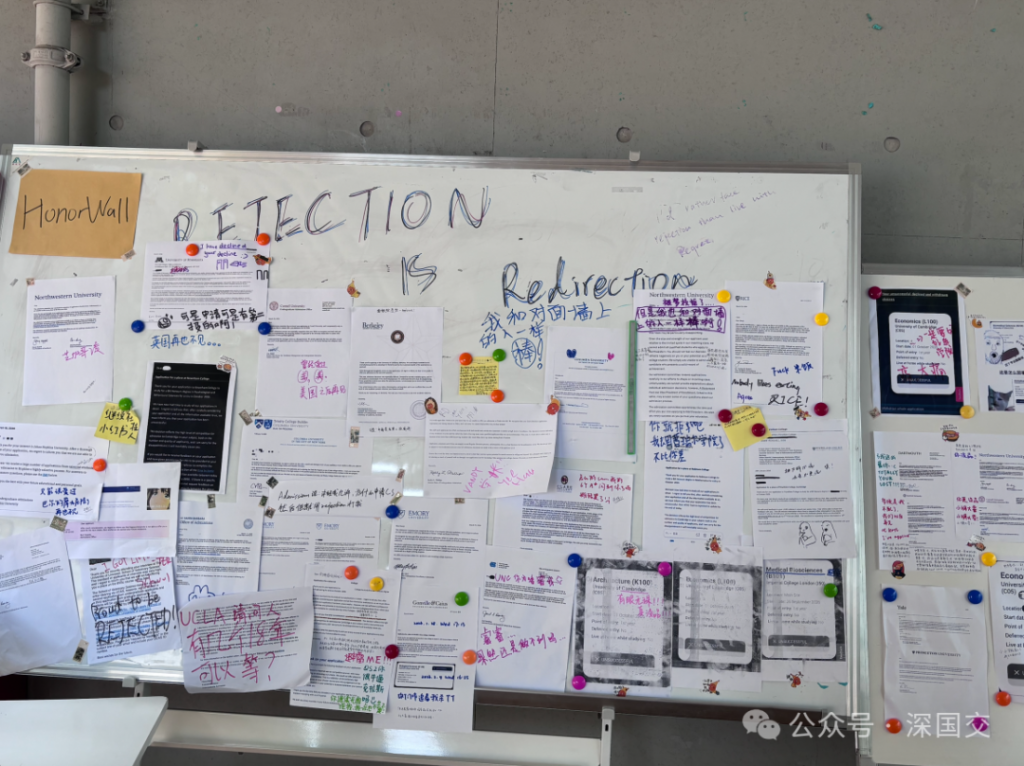
I resolved to study chemistry seriously, determined not to carry the regret from my AS International Exam into my A-Levels. But that resolve crumbled after just a month or two. I could cover a chapter of Further Math in an hour, but to this very day, I still don’t understand the transition elements. I could memorize all the organic reaction pathways in a single evening, only to open the exam and find it tested lab procedures. It’s not that I dislike chemistry. Aside from the exams, I actually enjoy almost everything about it. The frantic rush to avoid coming in last during Kahoot! games in chemistry class, the tension of debunking myths about U.S. college portals with friends one by one, and even the chilly breeze outside the chemistry lab on the 8th floor—all of these are unique memories.
Making My Own Choices
My application season wasn’t perfect. Seeing my peers—some accepted to Ivy League schools through Early Decision, others receiving no rejection letters via UCAS—while I, the “rejection letter collector,” gradually grew accustomed to the phrase, “We regret to inform you that we are unable to offer you admission.”
But looking back, I wrote way too many personal statements throughout the entire application season—UCAS PS, the Common App main PS, supplementary PS for various schools, plus those for the University of California and those in Hong Kong. By the end, I no longer knew what a “good personal statement” even was, but at least they all expressed what I truly wanted to say. While writing them, I dug up and revisited all the activities I’d done, the competitions I’d participated, the knowledge I’d gained, and the setbacks I’d faced over the past few years.
Later, even as rejection letters kept coming in one after another, that feeling of “it was all for nothing” grew fainter—because through writing those personal statements, I’d come to know myself all over again. When choosing universities and majors, others could tell me about each school’s culture and the differences between programs, but no one could answer for me the questions, “Where do I really want to go? What do I want to study?” I had to make those choices myself. This was probably the first time I’d seriously taken a step back to reflect on myself and figure out “who I am and what I want.”
I finally realized that statistics is all about probability, but only I know what I truly want. I have to make my own choices and take responsibility for them. Only then can I get off the bus at the stop I want.
I still find myself hesitating at the entrance to Yinli Center, wondering whether to go to Gaga or pLeace. But I no longer roll the dice. I’ll stop and think for a moment—today, what do I feel like eating?
This article can’t fully tell my story, nor can it capture all those days spent stumbling in search of myself under a desk lamp or in front of a computer. But one thing I’m certain of: two years ago, I left my fate to chance; two years later, I know—luck can serve as a guide, but the choices must be mine alone.
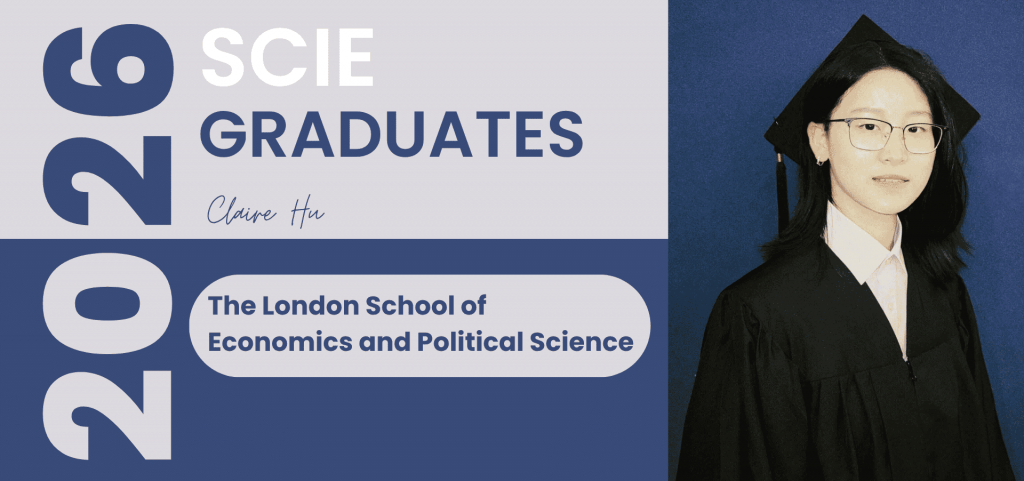
- Article / Claire Hu