Introduction
This summer, I attended a sound engineering course at HKU, where I set out to create my own “Interstellar” journey through sound. Faced with 52 AI-generated voices, I found that what mattered more than finding the “perfect” voice was making choices of my own.

Here’s the thing they don’t tell you about AI voice generation: having too many choices is its own kind of paralysis.
Our HKU summer sound engineering program team had a clear vision. We were producing our own Interstellar audio drama — a 4-minute sonic journey across wormholes, dying planets, and the unbearable weight of goodbye. We felt confident about the video.
What we didn’t have was a single voice we believed in.
ElevenLabs gave us fifty-two options! We scrolled through them like lost travelers in the universe: Adam (deep, authoritative), Bella (warm, maternal), Brian (raspy, aged), Ethan (crisp, intellectual), and on and on. Each name came with a demo clip — perfectly enunciated, perfectly paced, perfectly empty.
And then we spent four hours getting nowhere.
The script had six characters. An aging astronaut. A professor. A mission control officer. A stranded colonist. A child. And the ship’s AI. We thought the assignment would be straightforward — match the voice to the archetype. A deep voice for the astronaut. A warm one for the professor. And a sharp one for the mission control.
But ElevenLabs doesn’t work that way. Every voice is almost right, but we’re not satisfied with that ‘ almost’ .
We’d hear Adam (deep, authoritative) and think — yes, that’s the astronaut. Then we’d hear Brian (raspy, weathered) and think — no, that’s the astronaut, Adam is too polished. Then Ethan(crisp, intellectual) seemed perfect for the professor — until we heard Thomas (soft, contemplative) and suddenly Ethan felt too cold.
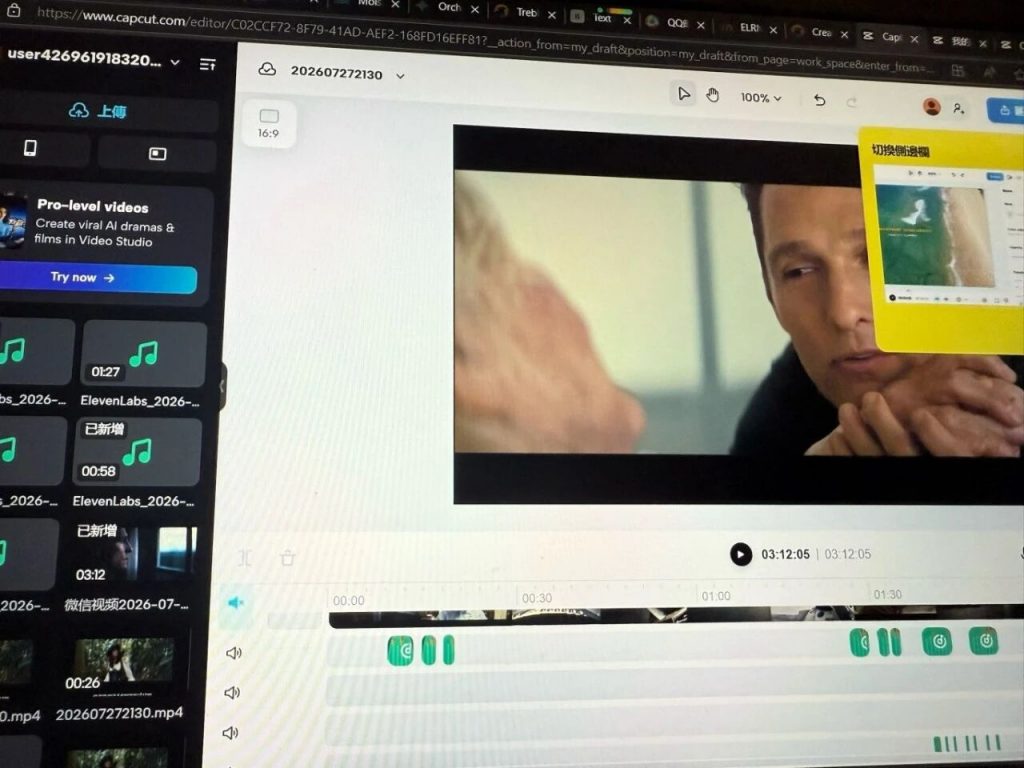

Three hours in, we were still cycling through the demos. No decisions. Just a growing sense of dread that we were doing this completely wrong.
The problem wasn’t the technology. It was us. We were treating voice selection like a matching game — find the right label, fit it to the right box. But characters aren’t boxes, they’re contradictions.
Here’s where the real learning happened. We stopped trying to find the voice for each character. Instead, we started asking different questions:
Which voice sounds like it’s hiding something?
Which one sounds like it hasn’t slept?
Which one would sound wrong for this line — and why?
That last question broke the paralysis. Because once we noticed what didn’t fit, we started hearing what could.
We picked three voices that were technically “wrong” for their roles. The astronaut got a voice that was too young — but that made his backstory more tragic. The professor got a voice that was too warm — but that made his cold dialogues feel more warm. The mission control officer got a voice that was almost robotic — because the story needed someone to cut through the chaos.
The choices weren’t perfect. They were deliberate. And that made all the difference.
What I’d do differently — a practical framework for next time:
1. Cast Against Type — Don’t match the obvious archetype. A tired voice for the young hero. A sharp voice for the nurturing figure. The friction creates interest.
2. Build a “No” List First — Before choosing any voices, listen to all fifty-two and aggressively reject the ones that feel too familiar. The survivors are your real candidates.
3. The Swap Test — Read one line of dialogue with Voice A, then Voice B, then swap them across characters. Sometimes the “wrong” voice unlocks the right character.
4. Commit Fast — Set a 10-minute timer per character. No demo listening beyond the first 15 seconds. Trust your gut, not the analysis.
In the end, our Interstellar project worked not because we found perfect matches, but because we embraced the imperfection of our choices — which is what really distinguishes us from AI. Modern technology makes AI so perfectly polished that they feel like ice-cold mannequins. Every obstacle we overcame is solid proof that we tried on our own.
And that’s the real lesson from this summer school: in the age of infinite AI options, the hardest skill isn’t finding the perfect voice. It’s the lifelike presence among us. It’s we humans who make the characters feel soulful and alive. That’s what really stands out.
We didn’t find the “right” voices. We chose voices, and then we made them right.
Maybe that’s what sound engineering in the future is really about. Not perfection, but that bit of human aliveness.
- Article / Angel Wen