Laboratory of materials science always sounds distant and highly academic, a space where students hardly have access to. However, a corner of Cavendish Laboratory just landed at SCIE on March 24, 2026, unravelling the infinite beauty of physics by delicately building a bridge between us and the top university at the other side of the earth.
Dr. Guan is a Doctor of Materials Science at the University of Cambridge who has demonstrated his high-level understanding of the subject by carrying out a range of scientific experiments and by publishing articles in authenticated academic periodicals.
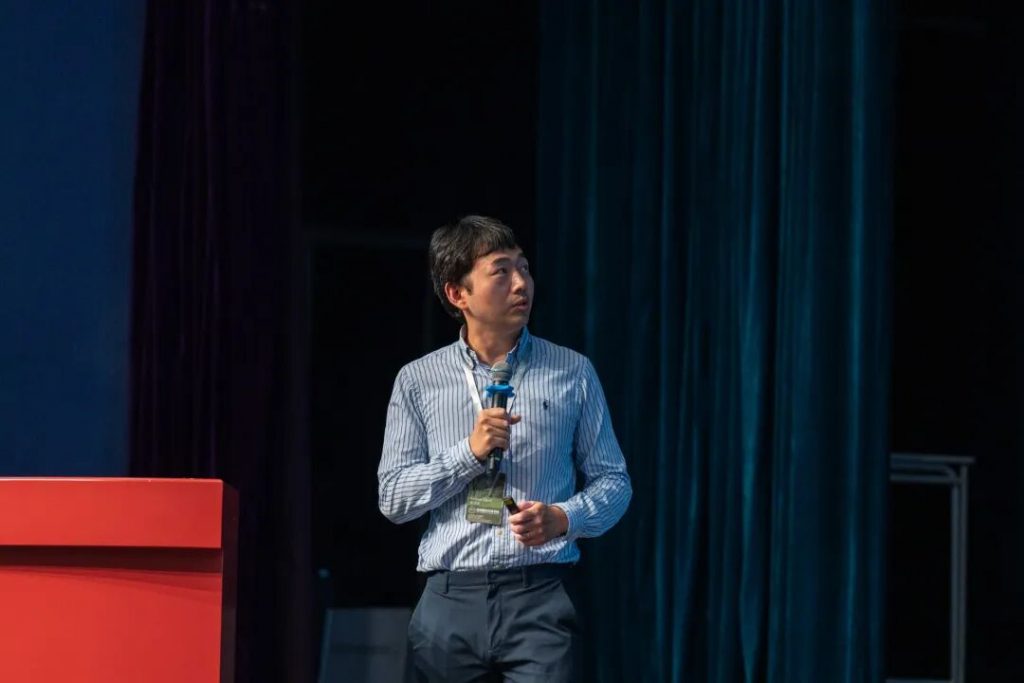
Dr. Guan started his lecture in a creative way by approaching students on a more tangible path. He patiently demonstrated the characteristics that the University of Cambridge is looking for in students, releasing the tension in the atmosphere of intense lectures into a peaceful sharing. The practical topics that he created have a closer connection to the top students in the audience, drawing attention from all students to make us stay focused in a more hidden but effective way.
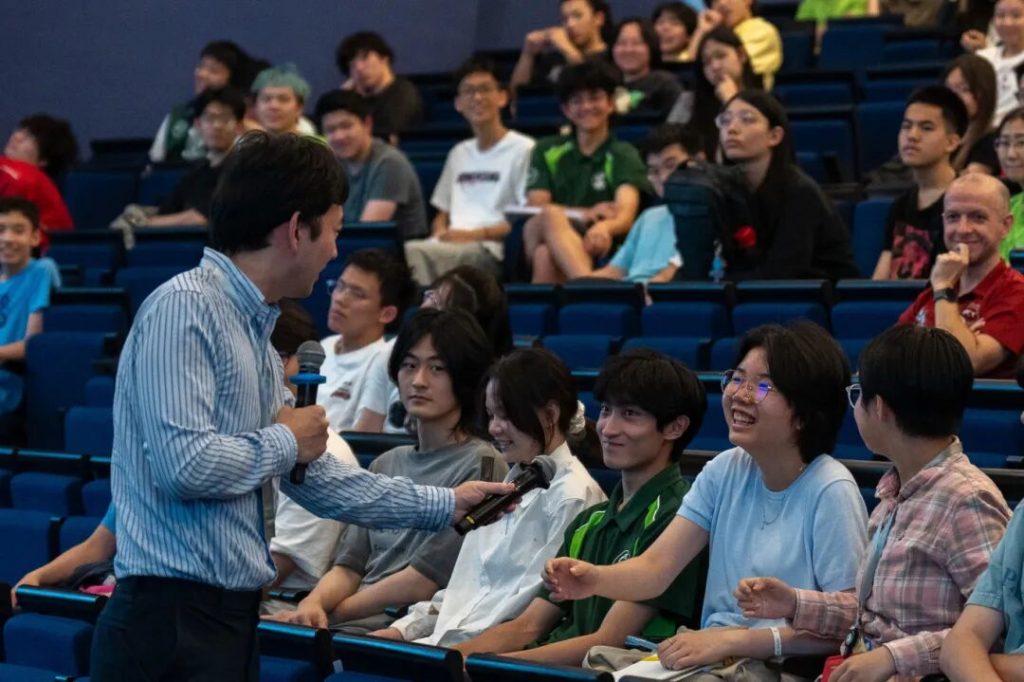
After confirming that none of us was sleeping due to boredom, Dr. Guan proposed an innovative topic of two types of people: seekers of the answers and the explorers of the unknown, at the moment when he starts to show the difference between this lecture and others – the interactivity. Beyond the expectations of a “normal” lecture, Dr. Guan jumped off the stage and walked into the audience with another microphone, prepared to receive new ideas at any moment. His patience drove him to guide students to the answers when they struggled with some of the aspects, reaching an agreement to be shown on the slides that made his ideas more effective and closer to our lives.
To extend our vision into the surface of physics, Dr. Guan further introduced us to popular physics questions, with the typical free-fall ball being the first one. Initially, the question came out at a simple model with many conditions neglected, motivating students to actively give their ideas by diminishing the pressure on us. The process surely did not go flawlessly receiving some inaccurate answers, but things still went on as if these answers fell into the delicate plan of Dr. Guan, who kept on encouraging us to achieve the correct answer by ourselves. The segments of science are definite and transferrable, but the sense of achievement of one reaching the solution on one’s own is never replaceable.
What was truly intriguing was never introducing high-level physics knowledge to the level of undergraduate, even master’s degree in the University of Cambridge, but adding elements and considerations one by one to the tower of modelling, approaching the answer with burgeoning precision. Dr. Guan identified this point and, hence, delicately built his intentions into the flow of thinking in the row of questions. The first part of the question is very simple and can be solved by kinematics equations; the second part requires a bit of transformation by assuming a constant magnitude of air resistance; the third part considers the change in air resistance as the speed increases. This gradual increase in difficulty and depth into the subject simulates the conditions of an interview at the University of Cambridge, enhancing students’ understanding of the methods for addressing challenges by breaking them down into sensible pieces.
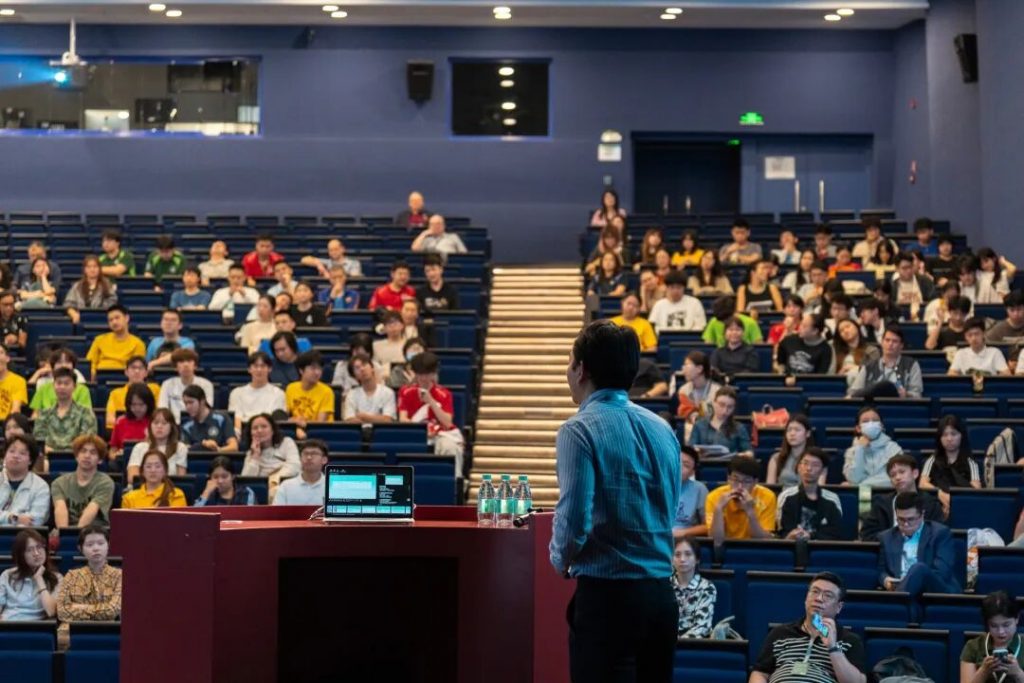
Dr. Guan ended his talk on physics without sharing too much information about professional details in his major, but instead he brought us the nature and virtue of a true researcher that weighs more than a list of memorised knowledge.
An amazing session passed quickly, but the lasting impact would not dissipate, just as the line of the poem Dr. Guan shared, “What I told will be forgotten soon, whilst what I made you feel lasts forever”.
- Article / Albert Liu