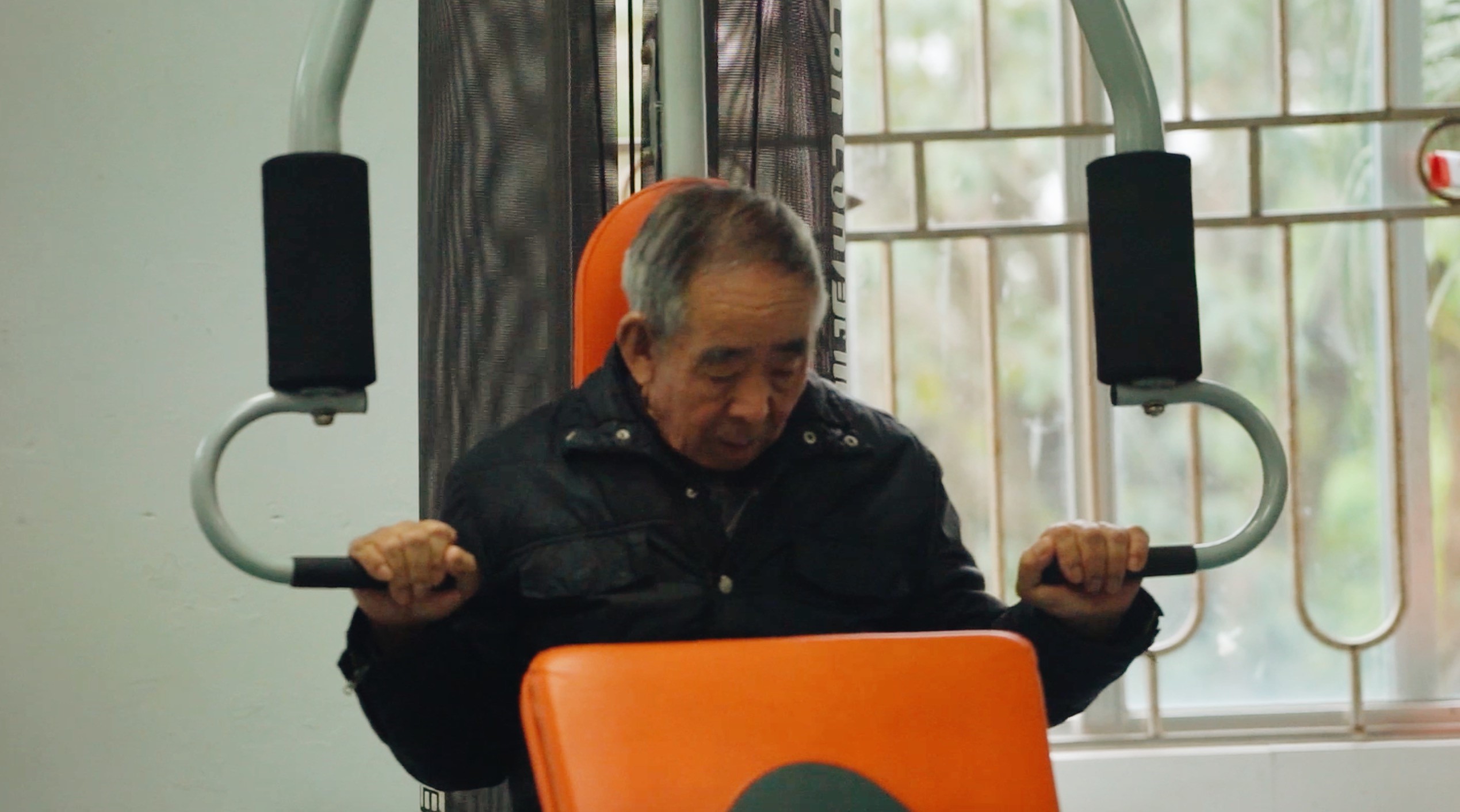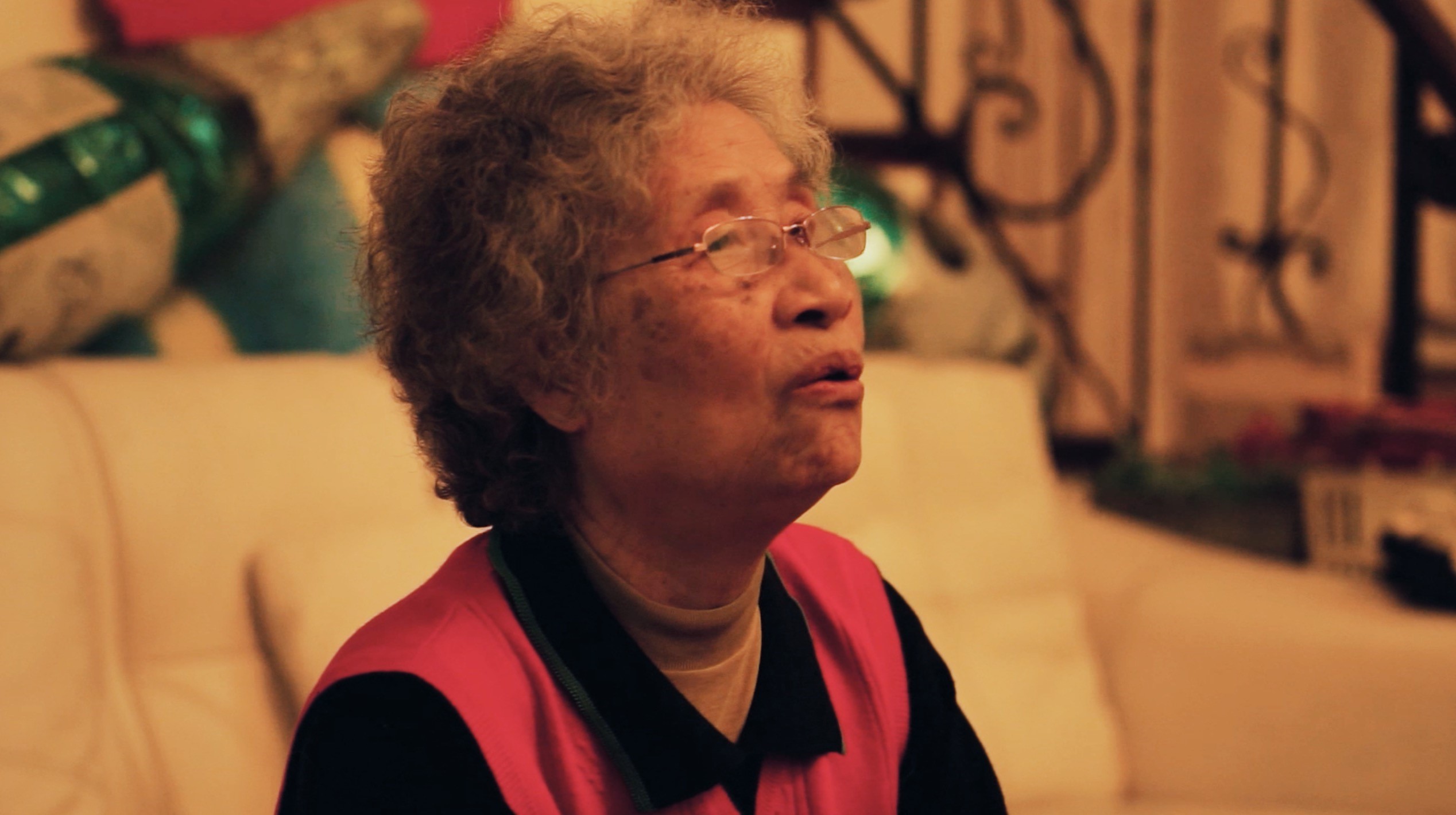
This summer I gave myself a fairly simple task: to listen. Visit an elderly service center, go back to Shandong to see my grandparents, go home for my nainai’s birthday — I thought all I had to do was lend out my ears, listen, take notes, and come back having “understood them better.” Once I actually sat down with them, it turned out to be nothing like that. Every conversation got pulled off in some new direction by their own stories, and whatever “understanding” I thought I’d already worked out kept getting taken apart first, before it could be rebuilt.
My first stop was an elderly service center in Shanghai. I’d done my research, showed up with a stack of questions about “how to care for elderly patients with mental illness.” I’d barely sat down before those questions started to feel beside the point. Whatever the caregiver there said in passing went deeper than anything I’d prepared to ask.
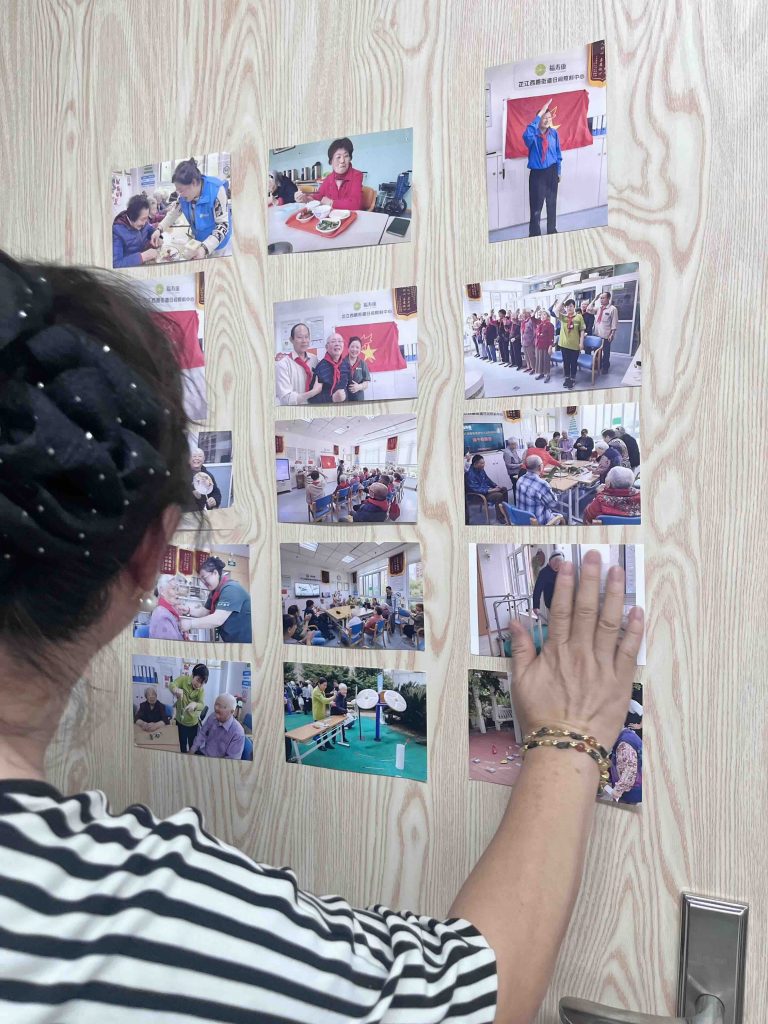
The wooden door of the office was covered edge to edge with photos, all lined up neatly. She walked me through them one by one, her finger lingering on each photo longer than I ever linger scrolling through my own camera roll: this one has Parkinson’s, needs someone to hold him up just to walk; this old woman is impossibly picky, and she’s smiling this wide because the food that day happened to be to her taste; on National Day, this old man in a wheelchair, a red scarf tied around his neck, two people holding him steady, still fought his way to standing so he could salute… She paused on that one, said it was the one that stuck with her most. Then she complained that the wall was too small — if it were bigger, she had plenty more photos she’d want to put up.
I asked her how she could possibly remember all of them. She said, “If we didn’t remember, then what would any of this be for?”
Tucked into the last few pages of the paper photo album on the desk were pictures of banners — the embroidered kind families give as thanks. I asked why none of them were hung up. “Oh, we’ve gotten plenty of those,” she said, “we just try to stay modest, not make too much of a show of it.” That line caught me off guard. Here was a group of people who spent every day dealing with illness and decline, and their first instinct wasn’t to put what they’d done on display, but to step back. Partway through, I threw out a few painfully naive ideas, and instead of brushing me off, she walked me through, seriously, why they were harder to pull off in real life than I thought, and along the way told me some of her own worries too. I’d shown up under the excuse of “learning,” and the lesson I actually walked away with went a lot deeper than anything I’d planned to ask.
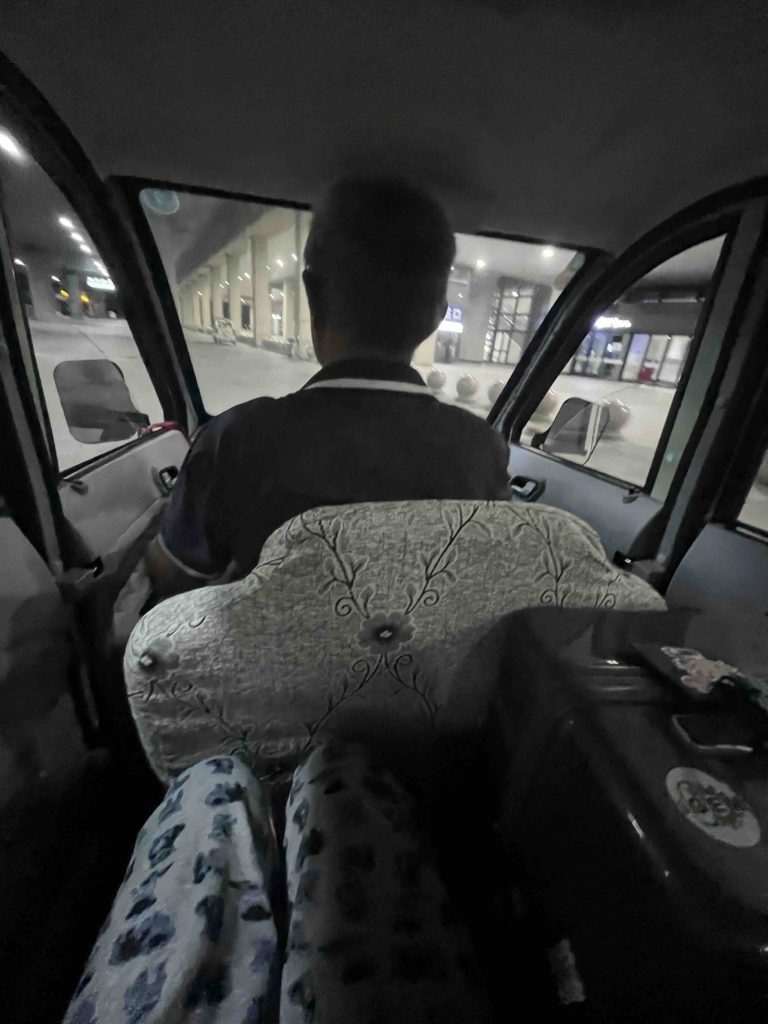
From Shanghai I flew straight to Shandong to see my waipo — my mom’s mother. She raised me from the time I was tiny until I started high school, when she finally went back to her hometown. This time around she was exactly the same as always, constantly asking if I wanted to try this, wanted to try that, like I was still the kid who was always whining that she was hungry.
When summer came up, she counted off on her fingers her favorite thing to do all season — catching cicadas. There’s a local snack in Shandong where you deep-fry the cicada nymphs. “I finish dinner around five, get myself ready, and head out, don’t come back till eight or nine,” she told me. “By the end of the whole summer I’d filled five jars.” In July, when the cicadas were at their thickest, she could catch fifty in a single night. I said, without really thinking about it, that a small jar of those sells for over a hundred yuan outside — why not go sell some, sounds like decent money. She shot back, like it was the most obvious thing in the world, “I just catch them for us. We catch them, we eat them ourselves, that’s plenty good.”
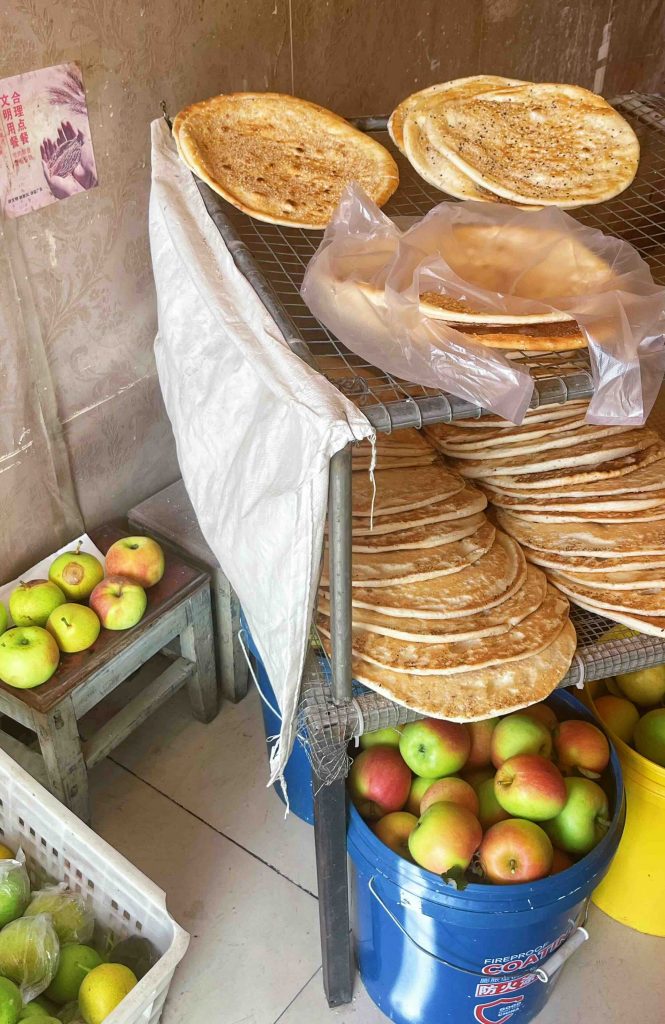
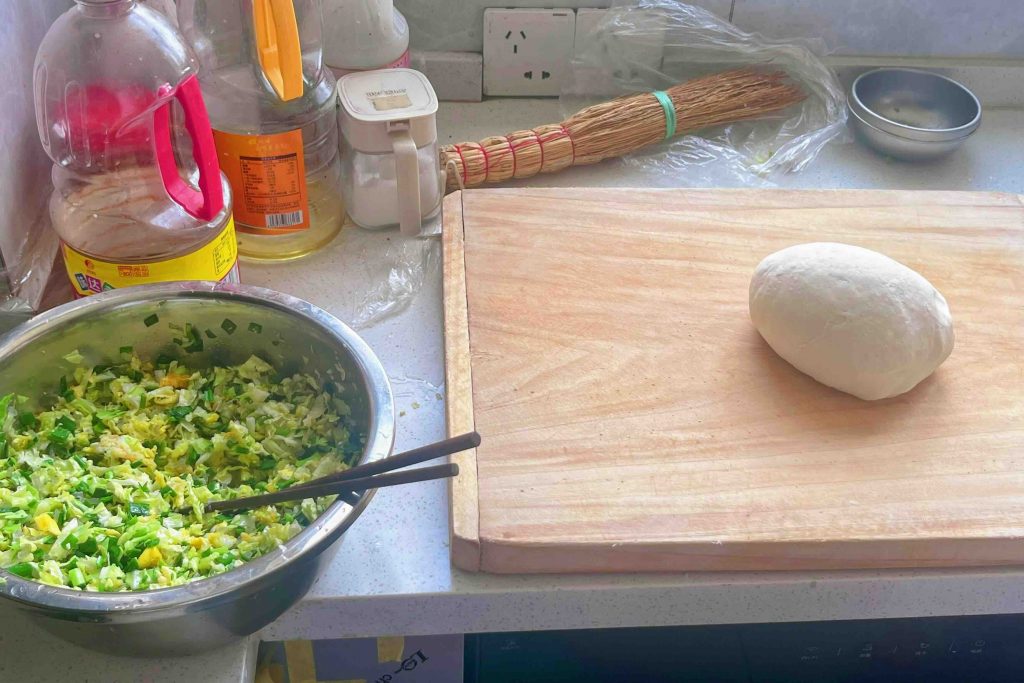
I’d been worried that spending every day in that small town might get boring for her. Turns out she had it all figured out far better than I did. She’d found, on her own, things worth counting down to on her fingers, and none of it needed to prove itself by being “useful.”
Not long after I got back from my waipo’s, it was my nainai’s birthday.
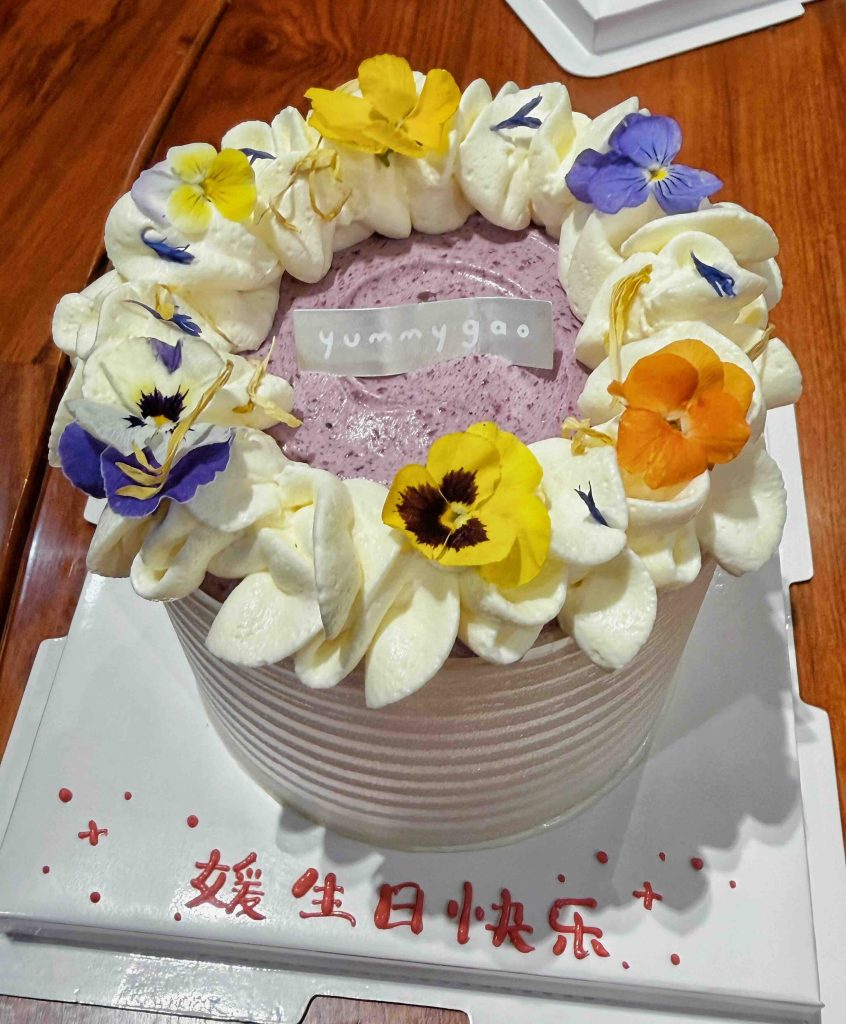
Everyone in the family had come back for it. My aunt had ordered a cake, and it sat in the middle of the table with a name piped onto it in frosting — “Yuan.” I stared at those characters for a few seconds, running back through my memory: for as long as I could remember, on her ID card, in the way every single one addressed her, her name had always been “Xuan.”
I found out later that decades ago, whoever was entering household registration records had a slip of the hand and typed in the wrong character — and that typo just stuck with her for the rest of her life. All these years, she’s kept insisting the name on her ID isn’t her real name, that her real name is “Yuan.” My aunt said, “One of these days I’ll take you to get it changed back!” She waved her off. “Ah, why bother changing it, I’m this old already, just leave it.” These days the process for changing your legal name isn’t nearly as complicated as she thinks, my aunt has brought it up more than once, and every time, she gives the same answer.
I didn’t say anything, but something in me sank. A person can live her whole life under the wrong name, get used to being called by it, and still, quietly, hold her ground for decades, that’s more than just “being stubborn.” But in the end, what stopped her was five words: I’m this old already. As if being old meant certain things just weren’t worth fighting for anymore.
Listening to all of this over the course of the summer, I realized I’d been asking the wrong questions from the start. I thought what I needed to learn was how to “take care of” the elderly, how to “keep them company,” as if they were something that needed filling up, needed managing. But that door at the elderly center hung up the old people’s stories and put away its own banners. Waipo’s five jars held a sense of accomplishment she could already cash in on herself, with no need to sell anything to prove it was worth something. And Nainai’s name, “Yuan,” had been buried behind her household registry for decades, with no one ever actually helping her hang it back up.
I still find myself thinking about what my nainai said:”I’m this old already, just leave it.”
- Article / Tatiana Yao