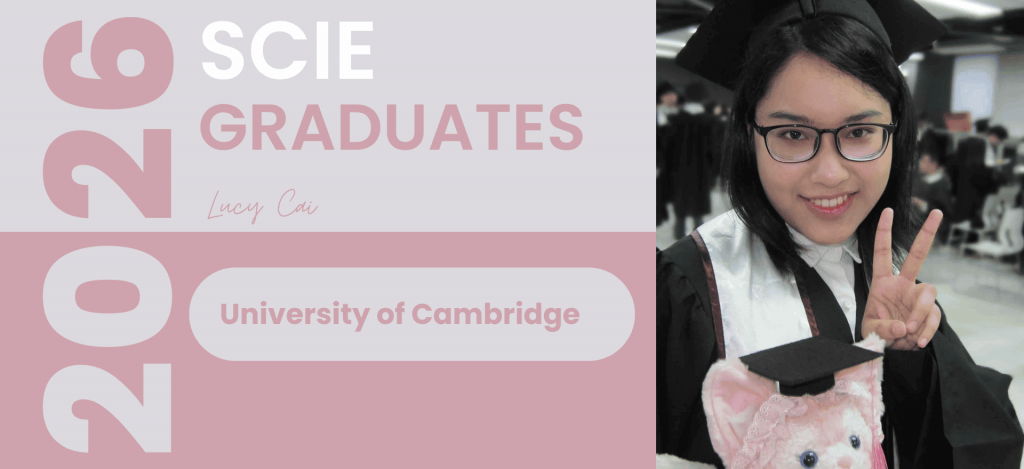
For a long time after receiving my Cambridge offer, I did not know how to begin this piece. Throughout these four years, my state of mind was always in motion, and everything that happened to me seemed to drift along with it. The good never seemed too momentous; the bad, somehow, never exceeded what I could bear.
Then let me begin with the first encounter with SCIE.
01 The Unknown
On 11 July 2022, I first stepped into this small world where I would spend the next four years. After that school visit, I posted photographs of vines following the light along a wire fence, eddies forming as a stream curved around two stone posts, and the tree in Shuiwei Square seen through Halo Theatre — back when it had not yet been replaced by the Yuanzhou sculpture (aka the ‘fishbone’). For someone who knew almost nothing about international education, it would be absurd to claim that I chose the school because I was drawn to an international curriculum. What excited me more, perhaps, was the sense of possibility and life that I somehow found in SCIE itself.
The academic foundation I had built in junior secondary school gave me an easy start at SCIE, and even left me with time to imagine things that still seemed far away. Less than a month into G1, I stood in the shower and ran through every major I had ever heard of. When the word ‘biology’ flashed through my mind, I felt an immediate rush of excitement. I later described that reckless, oddly devoted feeling as an ‘instinctive love’. Yet whenever I was asked, again and again before my university application, why I wanted to study biology, all I could do was smile awkwardly and say: I don’t know.
But try and see.
That was the spirit in which I registered to join GreatBay-SCIE, our school iGEM team. The nine months that followed remain, even four years later, the most challenging period of my school life and the one in which I grew fastest. All-nighters were normal: reading papers, running experiments, and writing reports. The project grew from one person to a few, then to a whole team. As more people with lively minds began to treat it as their own, we found the courage to try yet another Plan B and the confidence to go one step further. If simply loving biology could bring me to so many wonderful people, then biology itself must be a wonderful subject too. That was what my G1 self believed while surrounded by mostly G2 teammates, and the years that followed proved it over and over again.
The synthetic biology I encountered through iGEM became my first great love in the wider realm of biology. If the genetic sequences that encode life can be standardised into modular parts, can we understand life by learning how to build it? Our project focused on the treatment of invasive species. Perhaps it was because I took part in so much Human Practice work alongside the laboratory work; perhaps it was because typing the words ‘good and responsible for the world’ countless times had already left their mark on me. It was then that I first realised that studying life also means respecting life, and it was also my first encounter with bioethics.
Whether we controlled the invasive species directly or targeted the parasites living inside them, either choice would affect more than one form of life and could disturb existing ecological relationships. Bioethics does not simply draw boundaries around scientific development. It is a reminder that, once we have the power to intervene in life, we must still pause and listen to the needs of human society and the natural world: which lives and environments are being affected, and which real needs are being overlooked?
“Always be a responsible researcher.” Three years later, I wrote these words in my personal statement.
In the second semester of G2, encouraged by Mr Cunliffe, I turned our iGEM project into an individual report for the Global Perspectives coursework. I imagined a response that stretched from local action to cooperation between international organisations, and earnestly put together a solution that now seems rather immature. At the time, my belief was equally simple:
Science is there to solve problems.
02 The Unsolved
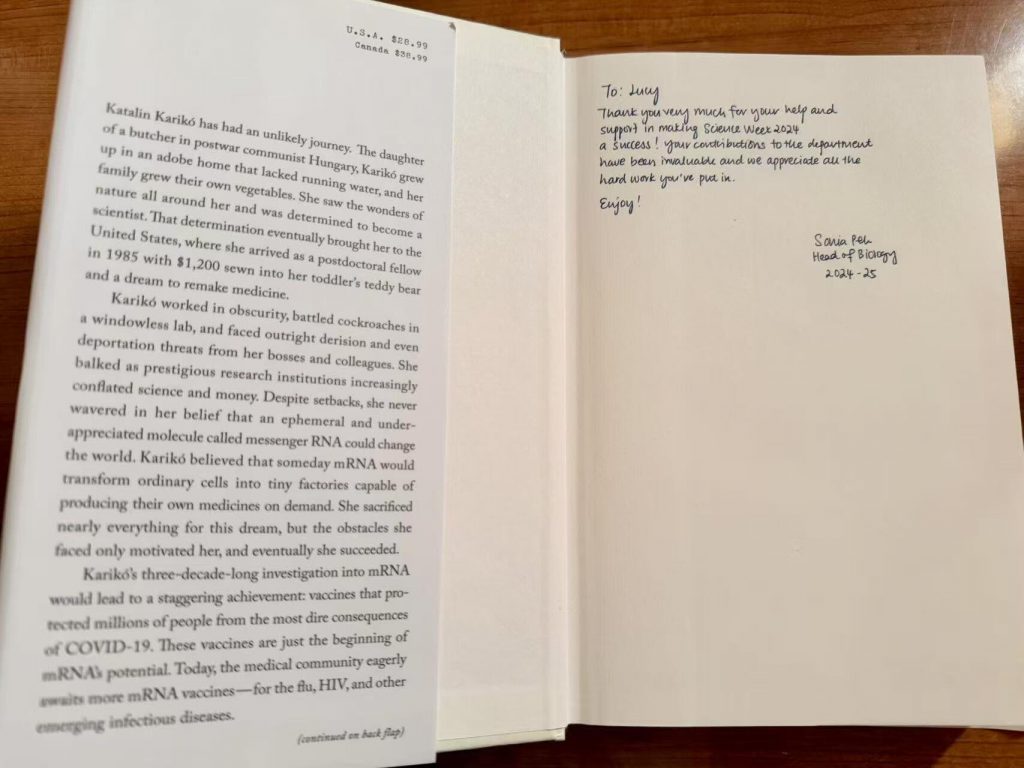
My love for the microscopic side of the life sciences led me to take on management of the school’s molecular biology laboratory (SCIE Lab) with almost no hesitation. I brought back what I had learned during an internship in a research group in the summer after G2. Like the seniors who first built the lab, I hoped to share the charm of molecular biology with my peers through hands-on experiments. (Everyone is very welcome to take a look → 注意看,这里有间实验室三岁咯!)
None of this appeared in my university application, yet during my A Level the lab became the place where I spent the most time outside my dorm room and classrooms, and the place I found hardest to leave. Later, a junior told me that her interest in synthetic biology had begun with a practical session I designed for Science Week, and that it had led her to determine biology as her major. More than any count of apparatus, reagents, or events held, her words showed me that a love which asks for no proof can still leave an echo in someone else.
For a while, I thought that love had already chosen my future for me. Then, after speaking with an SCIE senior who was researching biophysics, I began to question whether parts that had been separated and standardised would still work as expected when placed back into a complicated, varying biological organism.
Later, studying different branches of biology opened windows for me, giving me new ways to sense life and the world. It also showed me that, although simplification and modelling build a channel into understanding life, they struggle to capture the many layers of change within a real organism. Living systems have patterns, but they also contain fluctuation, randomness, and interconnections across different scales that cannot be cleanly separated. The more the living compartment is broken into parts, the more clearly I see how much of its complexity resists being taken apart. The more I learn, the more unsolved questions surface.
During the research internship, my PI once told me that every scientist has something they are obsessed with. Reading Katalin Karikó’s autobiography, I saw the same kind of persistence in her words: ‘If I have any superpower, it has always been this: a willingness to work hard and methodically, and refuse to stop.’ What, then, should those of us moving towards scientific research hold on to? A question we have followed for years? The courage not to retreat when no one understands? Or the willingness to let go of a conclusion we once believed when the evidence tells us otherwise? I don’t know.
Yet while working with a Biology teacher I was very fond of and trusted deeply, I caught a glimpse of one possible answer. When someone in the class caught an infectious disease, he understood everyone’s concerns but still insisted, again and again, that the situation should be explained honestly to the other students and their parents. He worked until three in the morning to turn epidemiological concepts into a question for the final exam. Only after he had finally explained the transmission and prevention of the viruses to the class did he quietly say that he could eventually feel at ease.
I began to suspect that persistence is not always about holding on to our own idea of what is right. Sometimes it is refusing to stay silent after we have seen a risk. I still cannot give a complete answer to what a researcher should hold on to. Perhaps it is honesty in the face of facts; perhaps it is responsibility for where knowledge goes and whom it reaches. But I do not think it should be only our own need to be right.
Of course, that Biology teacher also gave me a line I could repeat even in my dreams:
Science, is to admit how little we know.
03 The Unwritten
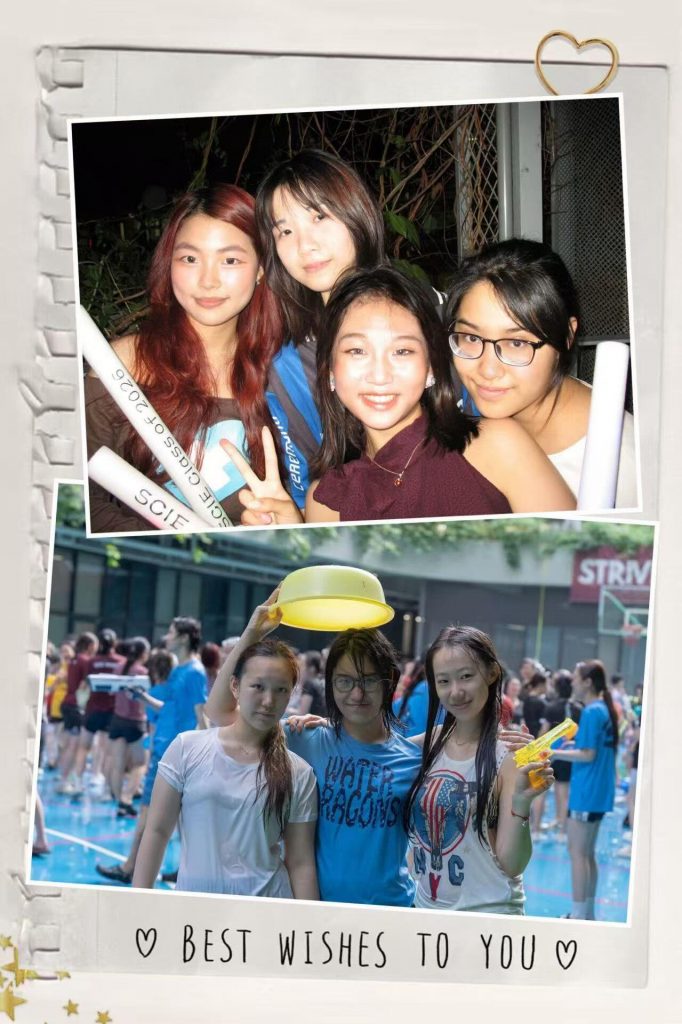
I moved through my application season with an ease that felt almost strange. ‘Application season’ was like a temporary pass that allowed me to shut out many unrelated distractions and leave only biology in the room. There was little room left for anxiety, because almost every day was spent doing what I genuinely wanted to do.
My personal statement tutor often reminded me that experimental results that do not match our expectations still need to be taken seriously and interpreted. They may not lead to a perfect conclusion, but they can expose the limitations of a hypothesis or make a vague question a little bit clearer. Gradually, I learned not to hurry past results that went against expectations, but to keep them in front of me and inspect a little longer.
On the Monday after I received my Cambridge offer, I met Mr Ostrowicz, my Further Mathematics teacher, who was about to retire. He said little. From across the classroom, he opened his arms and walked straight towards me. I almost cried, then hurriedly held the tears back. He had shared with me that he had studied mathematics and theology at the same time, and had encouraged me: ‘We don’t need to be constrained to one area.’
Not long ago, a young Chemistry teacher also told me how he had gradually moved from scientific research towards Eastern philosophy. I told him that I, too, hoped at some point in my life to find an opportunity to see the world from an entirely new perspective. Biology will be where I begin, but it does not have to decide where I go next.
While I was preparing for my A2 CIE exams, a singer I like released a new song with one lyric that went, ‘For now, put all of today’s uncertainty behind you, along with the hurt.’ I asked a fellow fan why it was ‘today’ that was uncertain. She replied that yesterday had already settled, tomorrow had not yet arrived, and only today hung between them, still wavering.
I moved through my application season with an ease that felt almost strange. ‘Application season’ was like a temporary pass that allowed me to shut out many unrelated distractions and leave only biology in the room. There was little room left for anxiety, because almost every day was spent doing what I genuinely wanted to do.
My personal statement tutor often reminded me that experimental results that do not match our expectations still need to be taken seriously and interpreted. They may not lead to a perfect conclusion, but they can expose the limitations of a hypothesis or make a vague question a little bit clearer. Gradually, I learned not to hurry past results that went against expectations, but to keep them in front of me and inspect a little longer.
On the Monday after I received my Cambridge offer, I met Mr Ostrowicz, my Further Mathematics teacher, who was about to retire. He said little. From across the classroom, he opened his arms and walked straight towards me. I almost cried, then hurriedly held the tears back. He had shared with me that he had studied mathematics and theology at the same time, and had encouraged me: ‘We don’t need to be constrained to one area.’
Not long ago, a young Chemistry teacher also told me how he had gradually moved from scientific research towards Eastern philosophy. I told him that I, too, hoped at some point in my life to find an opportunity to see the world from an entirely new perspective. Biology will be where I begin, but it does not have to decide where I go next.
While I was preparing for my A2 CIE exams, a singer I like released a new song with one lyric that went, ‘For now, put all of today’s uncertainty behind you, along with the hurt.’ I asked a fellow fan why it was ‘today’ that was uncertain. She replied that yesterday had already settled, tomorrow had not yet arrived, and only today hung between them, still wavering.
Over these four years, I have silently thanked every teacher, mentor, senior, classmate, and friend who offered help, inspiration, or warmth in uncertain times. To those who shared part of the journey with me: I don’t know how much further we will walk together, but wherever life takes us, I hope you continue to flourish in your own way and that all goes well for you.
For these final paragraphs, I want to leave them to my family.
During a break in the filming of the graduate interview, a teacher from the admissions office asked what my family was like. I said that we were a very traditional family, but that I was extraordinarily lucky: when it came to education, everyone was open-minded. They may not fully understand the world I am from, but they have never closed a door simply because of that.
In this traditional family, my elder brother is probably the one most in tune with me. He has helped me break down many unfamiliar and difficult problems, and has weighed the options with me at some important crossroads. I don’t know whether he sees relying on someone as a strength or a weakness, but more than once we have said to each other, half joking and half serious, ‘When I earn money one day, I’ll look after you—and you can look after me.’
There are more than forty years between my parents and me. Many thoughts are difficult to translate into words that all of us can empathise. I therefore learned early to work through many things on my own, make independent choices, and take responsibility for them. I don’t know what they think about during the times when we don’t talk. Nor do I know, on the days when we are apart, what they miss or hope for as they look through the photographs and videos I have taken and the words I have written. But I have never doubted that their love has always been there.
In the many stretches when we have little to say to one another, music has held the feelings I could not put into words and given me lasting comfort and shelter. Recently, I was especially moved by a line sung softly in Cantonese by a young girl:
‘Afraid that learning the answer to a whole lifetime too soon might mean missing the thrill and nerves of being young.’
Will the future bring me an answer?
I don’t know, and I am no longer in a hurry to find out.
- Article / Lucy Cai