Every morning, we set out from home and head toward campus; every afternoon, we leave along the same familiar route. How is this journey completed? Why do we make these choices?
In late November 2025, the SCIE Global Citizenship Division organized a series of World Sustainable Transportation Day activities. Through a range of events centered on “transportation,” we hoped to bring this often-overlooked daily behavior back into focus and reflection.
01. A Green Transportation Quiz
This activity helped students understand the real connections between transportation, carbon emissions, and urban mobility. The questions were built around engaging facts and concepts, such as how cities historically addressed transportation problems and the long-term impacts of those solutions; what the “15-minute city” really means; and how it could reshape our living radius. In this activity, every participating student could contribute points to their house, encouraging broad participation.
Through this interactive quiz, we hoped to move green transportation from something students had merely “heard of,” to something they had “understood,” and gradually toward something they would be “willing to try” and “happy to sustain.”
02. Public Transportation and Daily Travel Through the Eyes of Teachers and Students
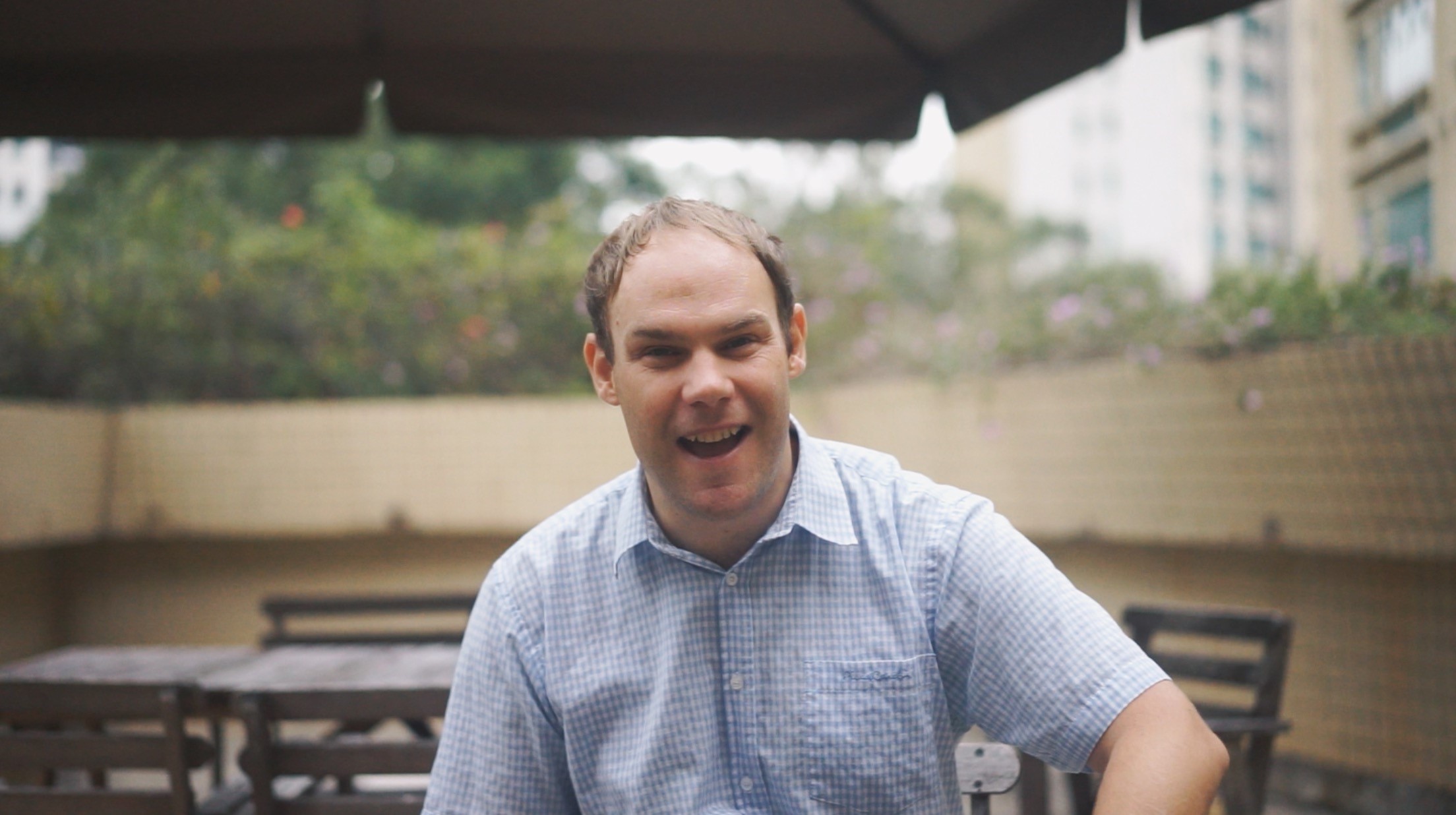
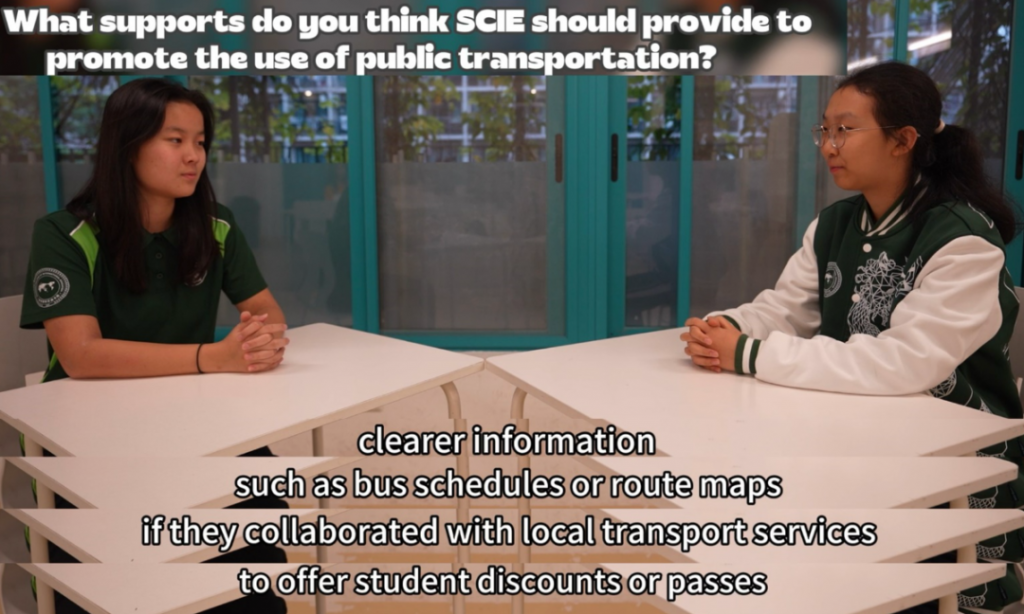
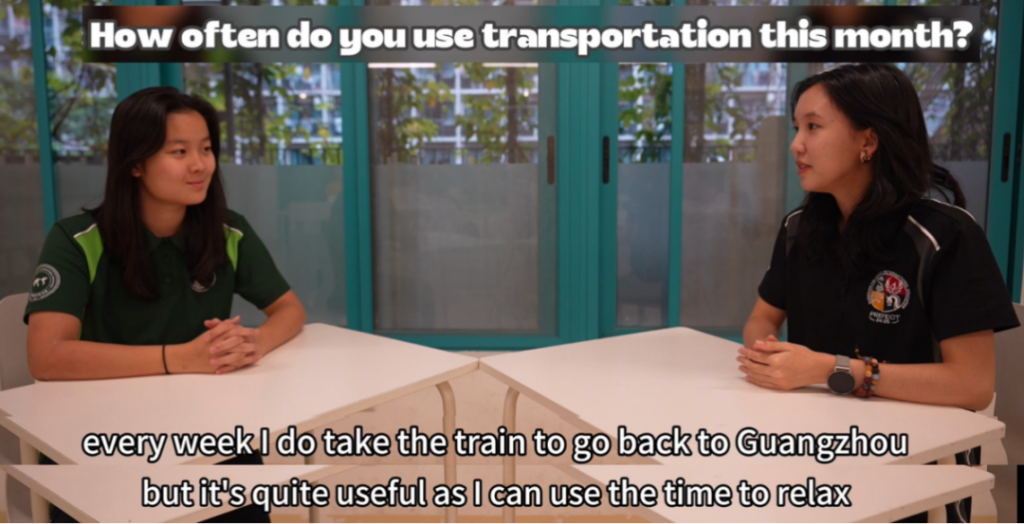
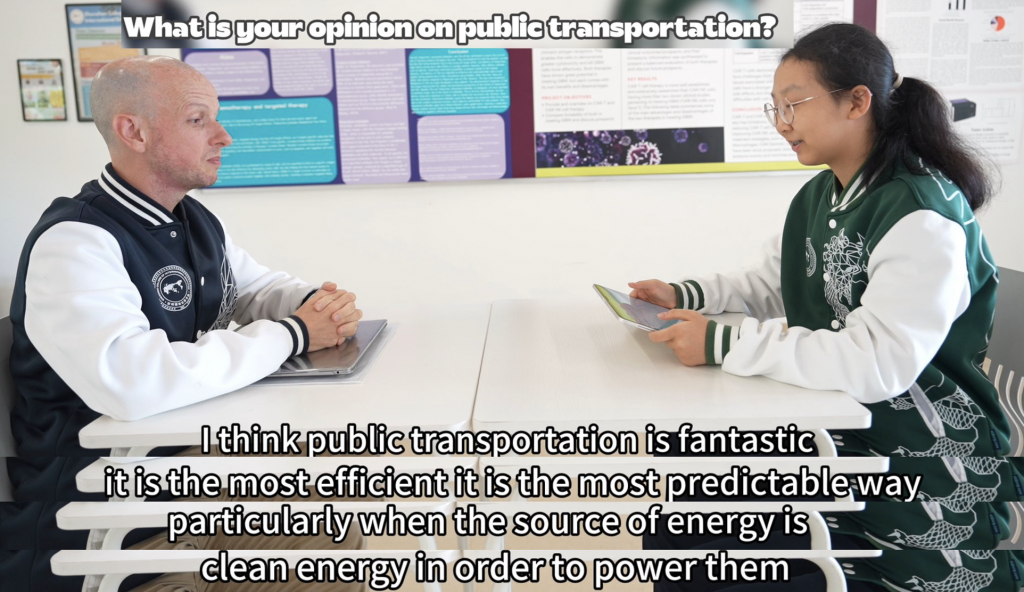
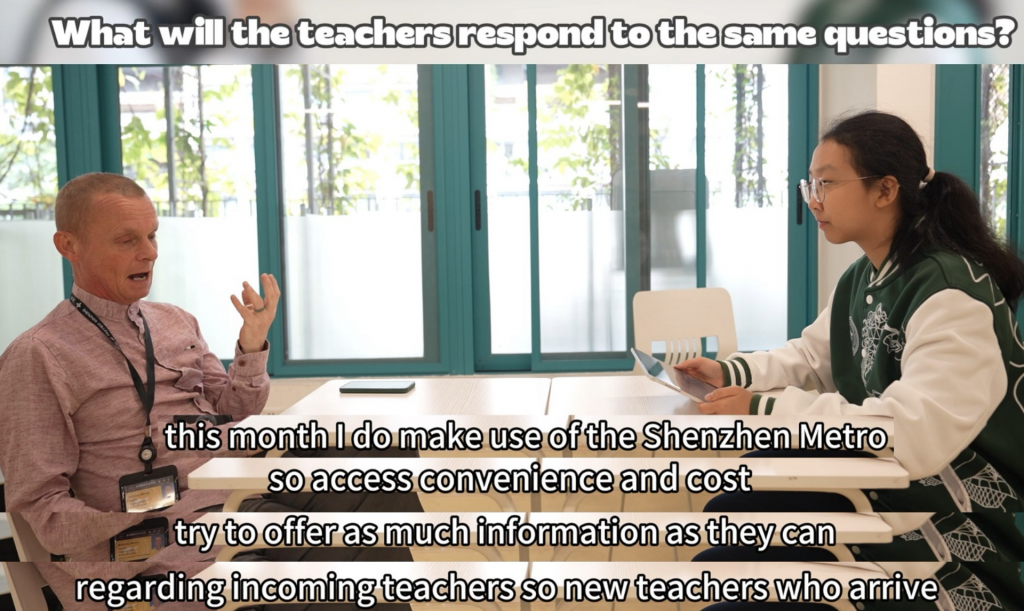
In the second series of Transportation Day activities, we interviewed several students and teachers. Our conversations focused on “daily commuting,” “perceptions of public transportation,” and “factors influencing travel choices,” capturing real and specific transportation decisions and the reasons behind them.
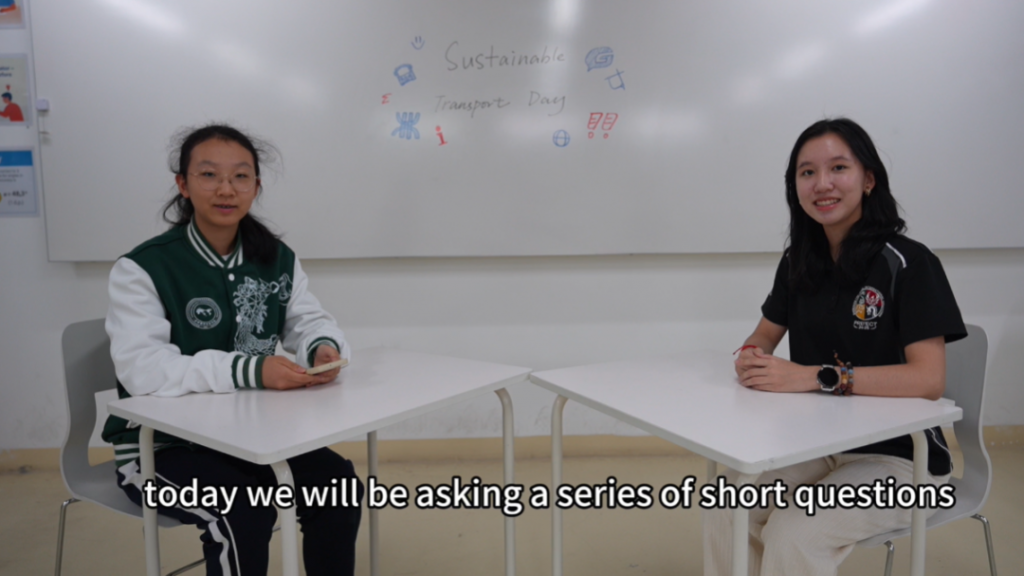
One student mentioned that they sometimes choose to take a taxi, but during heavy traffic, the metro often becomes the more efficient option. Another student shared that when commuting weekly by high-speed rail to and from Guangzhou, she uses the travel time to rest or complete homework. Public transportation has become an integral part of our lives.
When discussing the significance of public transportation, many interviewees independently mentioned reducing carbon emissions, easing traffic congestion, and lowering urban pressure. Although peak-hour crowding is unavoidable, public transport is still widely regarded as a more sustainable mode of travel.
When asked, “What influences your choice of public transportation?”, convenience, cost, and accessibility consistently ranked at the top. Environmental considerations were also important, but often only taken into account once feasibility was ensured. Sustainable transportation is not an unrealistic ideal detached from daily life; rather, it is a balance grounded in real conditions.
Teachers’ responses offered another perspective. One teacher shared that he now chooses to walk to work because of a suitable commuting distance; in his previous urban life, public transportation was almost the only option. Frequent use of the Shenzhen Metro also allowed him to experience the efficiency and reliability of public transportation firsthand. When discussing the support schools could provide, both students and teachers highlighted the importance of clear information and guidance, including bus and metro route information and introductions to commonly used transportation apps.
03. Sharing at the G2 Grade Assembly
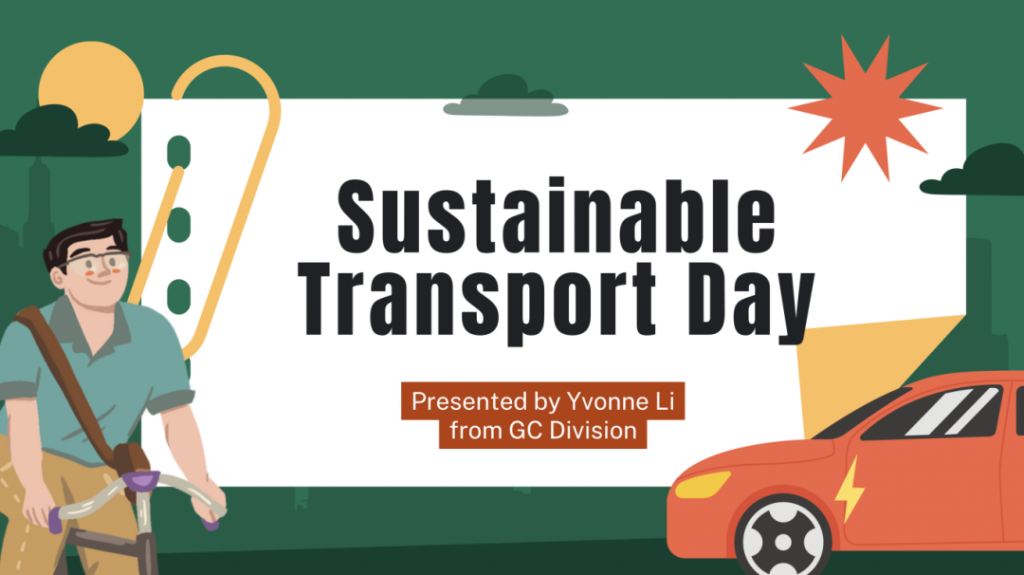
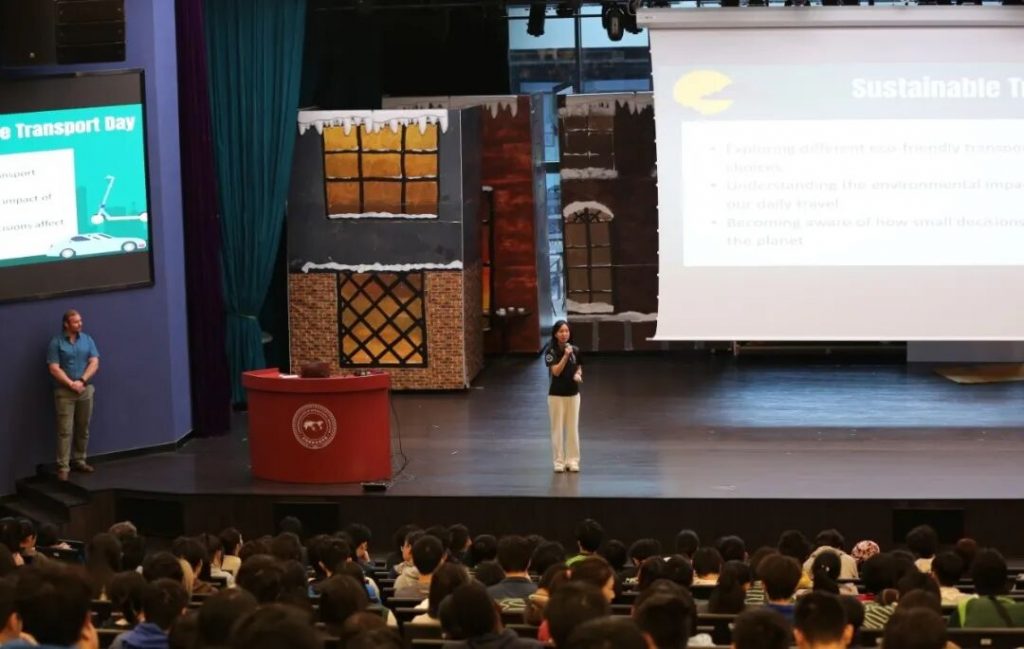
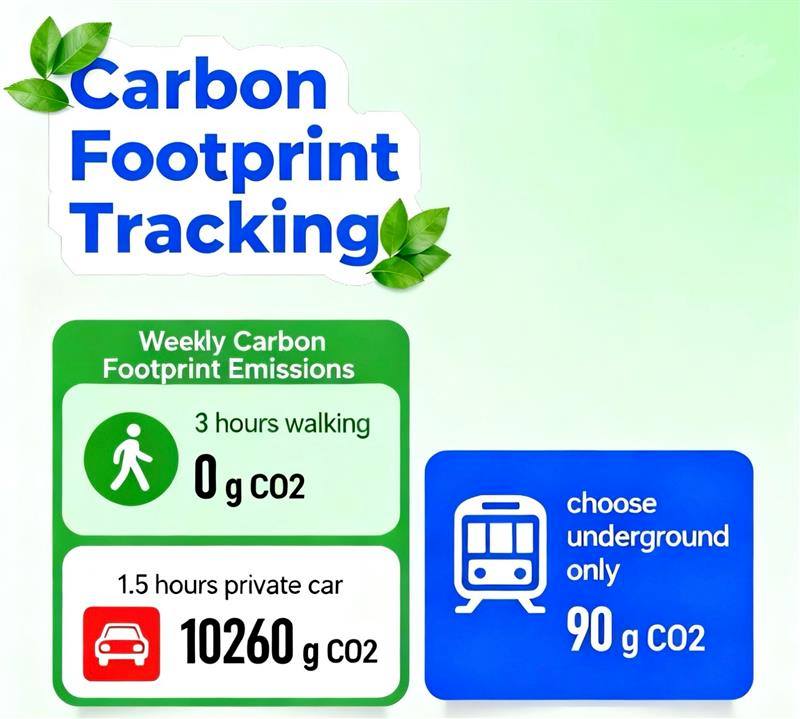
GC Division Deputy Chair Yvonne led G2 students in revisiting the concept of sustainable transportation during the grade assembly. In this sharing session, we focused on three interrelated themes: the actual differences in carbon emissions among various modes of transport, the hidden impacts of “habitual car use” in short-distance travel, and the connections between transportation choices, physical health, and the quality of urban space.
We hoped to convey a more realistic and sustainable idea: in many everyday situations, there is room for adjustment and reconsideration. Let us make small but different choices together, and “vote” for greener modes of transportation.
04. Creative Posters by the G1 Grade
The final part of Transportation Day was completed collectively by G1 students.
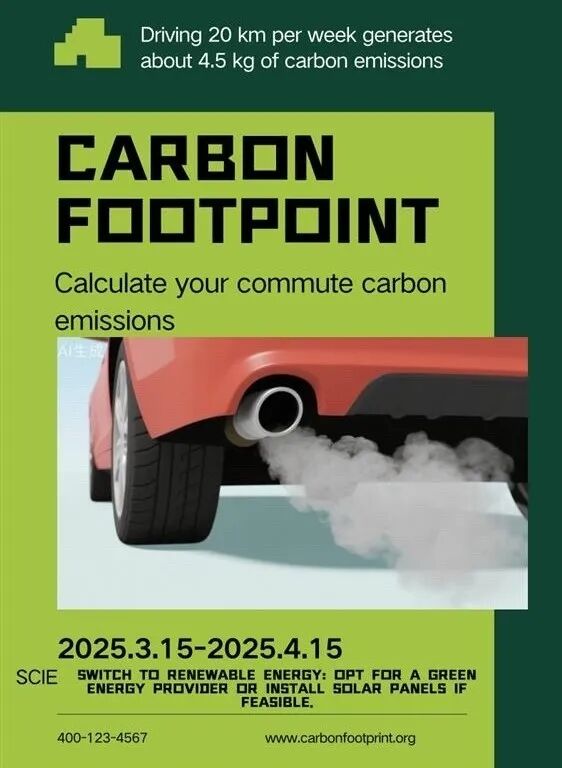
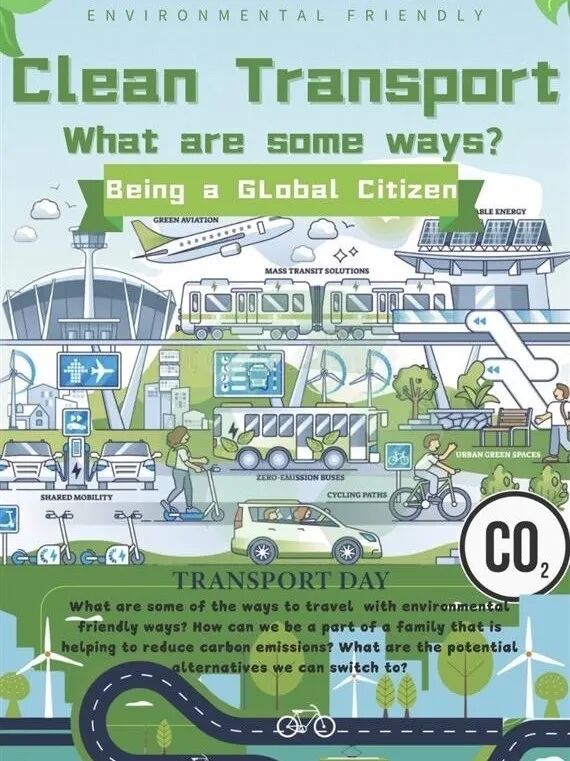
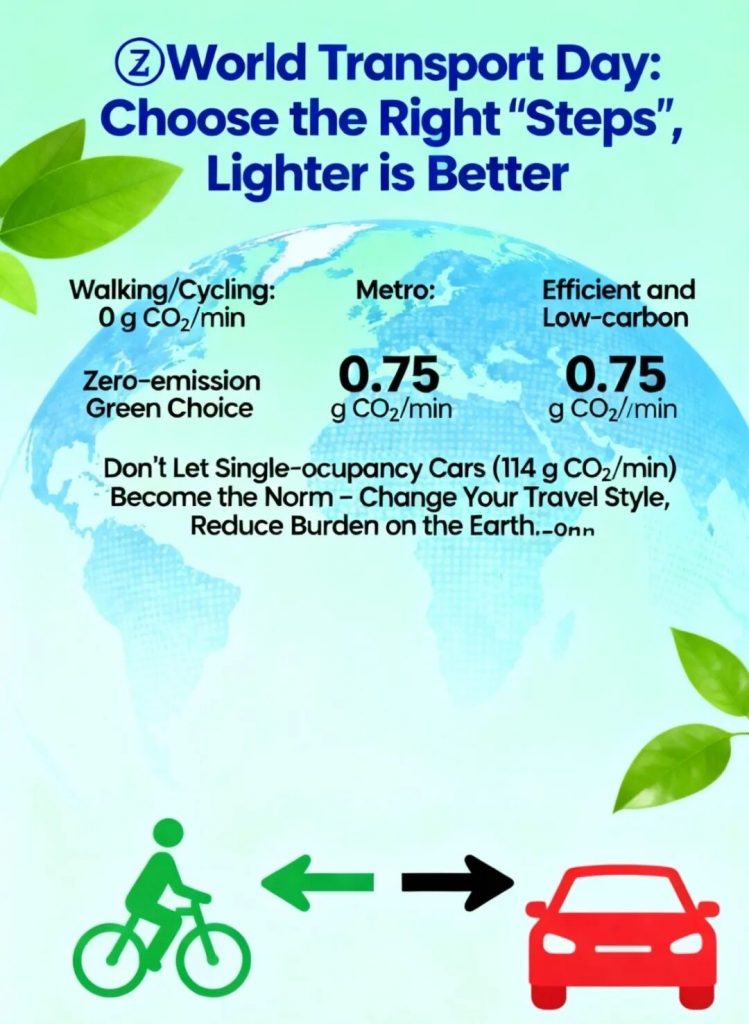
Centered on themes such as “green transportation,” “carbon footprint,” and “clean transport,” students designed and produced a series of activity posters.
These posters communicate messages and create visual impact—they turn “low-carbon travel” into concrete scenes that can be seen and discussed.
Final Words|Starting from One Journey, but Not Ending There
This Sustainable Transportation Day was not an activity limited to a single day. Rather, it served as a reminder—that many choices that seem insignificant are in fact shaping much larger outcomes. Perhaps it is just one walk, one decision to take the metro instead of a taxi, or one moment of asking ourselves, “Is driving really necessary?” Yet it is precisely these small, repeated actions that determine the future we move toward.
The organizing team would like to say…
Yvonne: As the main organizer of this event, I would like to say: change comes from actions that have been thoughtfully considered. This Sustainable Transportation Day encouraged more people to think, express, and make choices, and to participate in a learning experience about responsibility, communication, and real-world implementation. I would like to thank Ms. Angelien for her support throughout the entire event and for providing invaluable advice and thank our English teacher Mr. Anthony and Physics teacher Dr. Neto for participating in our interviews and sharing diverse perspectives and unique insights on transportation choices.
Judy: During World Sustainable Transportation Week, I interviewed several teachers and students and learned about their views on sustainable transport. I found this to be a deeply meaningful experience. Everyone’s enthusiasm and commitment to sustainable transportation greatly inspired me and strengthened my confidence in building a more sustainable campus. I look forward to working together with everyone to make our learning environment and community better.
Felisa: Sustainable Transport Day allowed us to directly experience the impact of daily transportation choices on the natural environment. Before this event, I had never seriously examined my own “carbon footprint,” nor fully understood how the differences between public and private transportation, over days and years, could have such profound effects on the global environment. This experience further strengthened my determination to practice green travel and choose public transportation more often.
- Article / Yvonne Li