Late May brought soft drizzle and gentle breezes sweeping through the woodlands of Antuo Hill. The air was filled with young people’s drive to chase their dreams, along with the quiet hopes of countless families for the future. The second round of entrance exams at Shenzhen International College of Education (SCIE) got underway as planned.
As a member of the Student Leadership Body (SLB), I took part in the parent reception throughout the day. I arrived at the information desk early, where I helped with directions and answered questions, and witnessed this meaningful event, one that marked new choices and growth.
The busy morning and warm chats with parents left me with plenty to reflect on. Listening to their concerns and offering help gave me a deeper understanding of our role in the SLB, as well as the core values that define education here at SCIE.
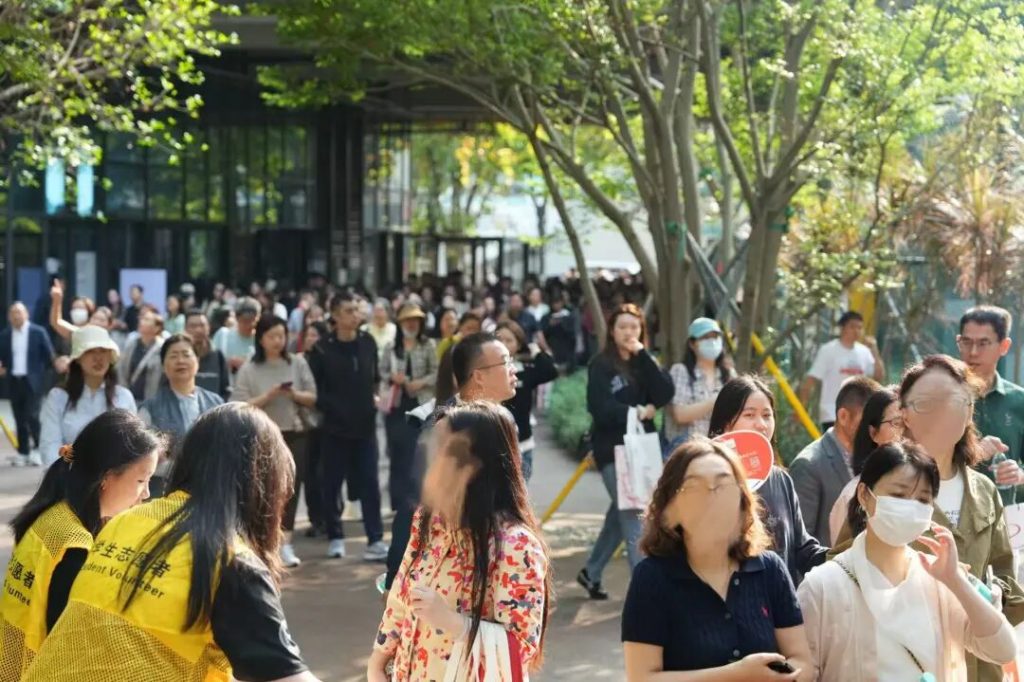
By 7:30 a.m., the normally quiet campus was already bustling. Signposts lined the school entrance, and SLB volunteers alongside staff and teachers were in place. Separate lanes for exam candidates and waiting zones for parents were clearly marked.
We had spent days sorting out roles ahead of time: some guided student traffic at the gates and in hallways, while others like myself stayed at the parent help desks. Our tables were fully stocked with school brochures, drinking water, and light refreshments, ready to welcome families who had travelled from near and far.
Groups of candidates made their way toward the campus. Some walked with calm confidence, while others appeared slightly nervous. Their parents walked beside them, holding umbrellas above their heads, their hopeful yet restrained expressions following their children into a campus shaped by aspirations for international education.
Soon, parents gathered around our desks with a wide range of questions. Some, whose children came from local public schools, were interested in the advantages and challenges of switching to an international curriculum and how students might adapt to a different learning environment. Many had travelled from different parts of the country and were concerned about accommodation and school meals. Even parents whose children had already received offers in March were still unsure about future majors and long-term plans, and were eager to hear advice from current students.
My peers and I drew on our own experiences and the school’s educational ethos to offer honest and practical responses. I shared how challenging the transition to G1 can be, particularly due to language barriers, and how teachers and classmates supported us throughout the process.
I also shared my own experience of picking A-Level subjects, balancing personal interests and academic goals. I told them about our hundreds of clubs, volunteer projects, summer programmes and international competitions, and shared tips on juggling studies and extracurricular activities. We were far more than just information providers. We acted as a vital link between the school and families, easing worries and giving parents peace of mind through real student perspectives.
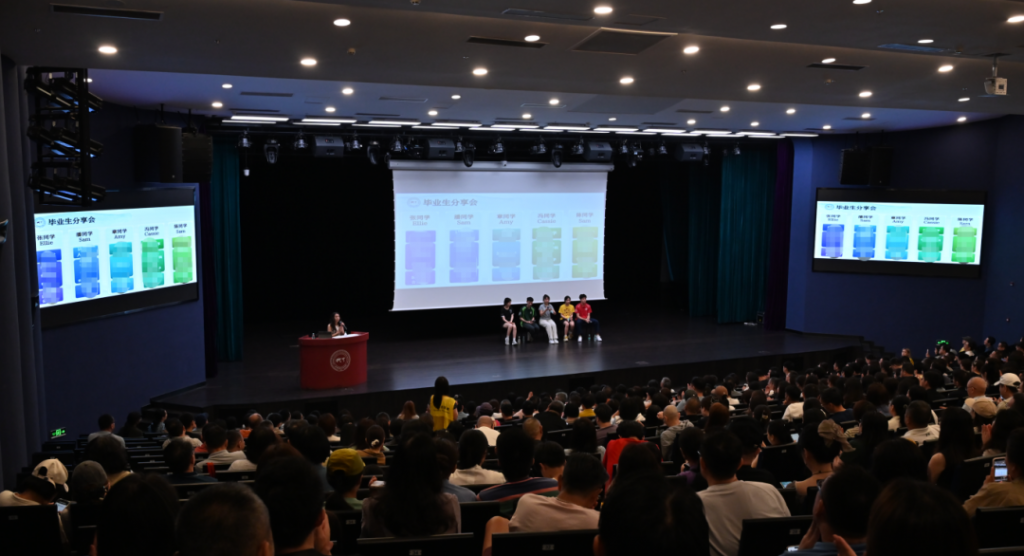
A graduate sharing session was held at the Halo Theatre. Five outstanding graduates went on stage. Mature and poised, they shared their journeys from SCIE to world-class universities. They recounted stories from their application journeys and daily campus life, offering valuable insights to parents and younger students alike. They addressed complex questions thoughtfully and comprehensively, impressing everyone with their sharp thinking and broad outlook — qualities fostered by SCIE’s education.
After the session, many parents wandered around the campus, visiting teaching buildings, the library, and dormitories. They stopped to look at student posters and artwork displayed along the corridors. Some toured the canteen and dorm rooms, while others stood on the sports field looking out over the campus, clearly filled with admiration. We stepped forward to introduce campus facilities and daily student life, answering all their questions about teachers, courses, and extracurricular activities.
Around midday, exams finished, and students began to pour out of the halls. The waiting area instantly came alive. Parents hurried over to meet their children. Few asked straight away how difficult the tests had been; some handed them water and comforted them gently.
Watching these young faces — some relieved, some resolute — I thought back to myself two years ago. It struck me that entrance exams are never a final judgment. Instead, they are a mutual match. SCIE assesses each candidate’s potential and whether they fit our community, while families decide if our school’s values align with what they want for their children. Whatever the outcome, life keeps moving forward. The courage to sit the exam and the dedication put into preparation are what truly make this a rewarding experience and a memorable part of growing up.
In recent years, discussions about international education and SCIE often focus on exam results and top university admissions, sometimes with a sense of anxiety. But to me, these numbers do not represent the whole of education.
During my time at SCIE, I have felt that the school values not only academic achievement, but also students’ overall growth. The structured curriculum helps us prepare for future overseas study, while activities, clubs, and the campus environment allow us to explore different interests and find our own pace.
I think many parents are not only looking for an offer letter, but also for whether their children can learn to think independently, keep trying when facing difficulties, and gradually develop a broader perspective.
At SCIE, I have come to realize that these are not abstract expectations, but experiences formed through daily lessons, activities, and interactions with others. In this process, I have begun to understand education as something that not only leads us further, but also helps us become more complete.
- Article / Yolanda Xu
- Photography / Lorris, Albert, Radin