Intro:
There are many ways to visit Paris. Some come for the art, drifting through the Louvre for hours in quiet admiration. Others come for the food, the fashion, the cafés, the romance of the Seine at sunset. All of that exists, of course, and we saw our fair share of it. However, I came to Paris specifically for the French Revolution.
Not that I was blind to everything else. Paris is a city clothed with centuries of history, marked by the presence of kings and emperors, cathedrals and revolutions, wars, restorations, and republics. Every street seems to contain three different centuries at once. But among all those stories, one chapter, just one decade out of all those centuries, has always stood above the rest for me. The French Revolution, from 1789 to 1799, was the pinnacle of Enlightenment republicanism—a moment when liberty, equality, and citizenship suddenly became a reality and transformed the political imagination of the modern world.
So, this travel log is, in a sense, exactly what the title suggests: a beginner’s set. Not a complete portrait of Paris, but a collection of the places, objects, and streets where that revolutionary story once unfolded. I knew before arriving that far more had happened here than I could ever capture. But if I followed the traces of the Revolution specifically, I thought, perhaps I could glimpse the city through the same streets where those voices once argued, shouted, and dreamed of remaking the world.
Feb 6
It was finally four-thirty PM. The whole day had been spent waiting, waiting, and more waiting… who could think that there were eight hours from 7:50 to 4:30? My hand tapped on the handle of my suitcase as I leaned against it and engaged in chitchat. My hands flew through my cross-body bag, sifting through the meticulously organized items – passport, documents, earbuds, water bottle, phone, pillow, winter clothes, passport… check.
Our group slowly grew, from a small huddle of people and suitcases to a full group of 20 students and 3 teachers. Annie offered me her tulips, and I took one. We’d no place to put them, though, and by the time we left, there were four tulips stuck into the mud of the school pool. The school was already quite deserted – those who didn’t need to stay for this trip had left for home at noon. We were in school past our time, but we loved it.
We were standing right across the basketball field from where we started last time, and if I squinted hard enough, I could still see myself from 2025 September hanging on to the same suitcase, hands flying in excited small talk. The memories were doubled again as we walked down the same path. There was no Mr. Igor & Co. waving at us from the climbing wall this time.
Up the bus we went – “Who dropped pumpkin bread on the road?” – and I sat with my friend in the third row. The sun was shining yellowish – it was still too early for it to be completely orange – and it streaked through the trees. “We’ve set off,” I messaged my mother, “I’ll send you every picture I take so you’ll be fully informed!”
Same path through Customs, same shuffling of bags like geese with beaks in feathers to store our passports safely while not blocking the path, same airport, same McDonald’s. Cheers, we said, to Paris, toasting with the small cartons of rip-off Finnair blueberry juice William bought, then realised that we were three minutes away from the meeting time.
Storing baggage and passing through the final Customs check wasn’t that hard as we chatted about nothing in particular. It was also the night for a game’s live streaming for a new version preview, and we gawped, oohing and aahing about the new characters as we shucked off our bags and jackets, stepped through scanning doors, and finally made it to the boarding gate.
I had had a good night’s sleep the night before. Last year, I had fought the war between my blindfold, neck pillow, and earphones; this year, I fought the game of cards. I was winning at just when we needed to get ready to board.
Another fourteen-hour flight was ahead of me. I hoped I’d get some good sleep!
Feb 7- ish. Time was weird on planes.
But it was all okay by the time we landed. It was the morning of February 7th in Paris – or, rather, dawn. There was another bus ride – I’d sat for more than half of the time since this trip started, and my bottom sorely disapproved – and I glimpsed the Eiffel tower through the fog-riddled window, the rising sun behind it. We were going straight to Versailles.
Breakfast was two-thirds of a baguette sandwich, ordered by waving hands and pointing fingers, as we stomped around trying to chase away the cold in the freezing wind. As the sun broke through the layers of clouds, the railings of the Versailles Palace reflected brilliant gold.
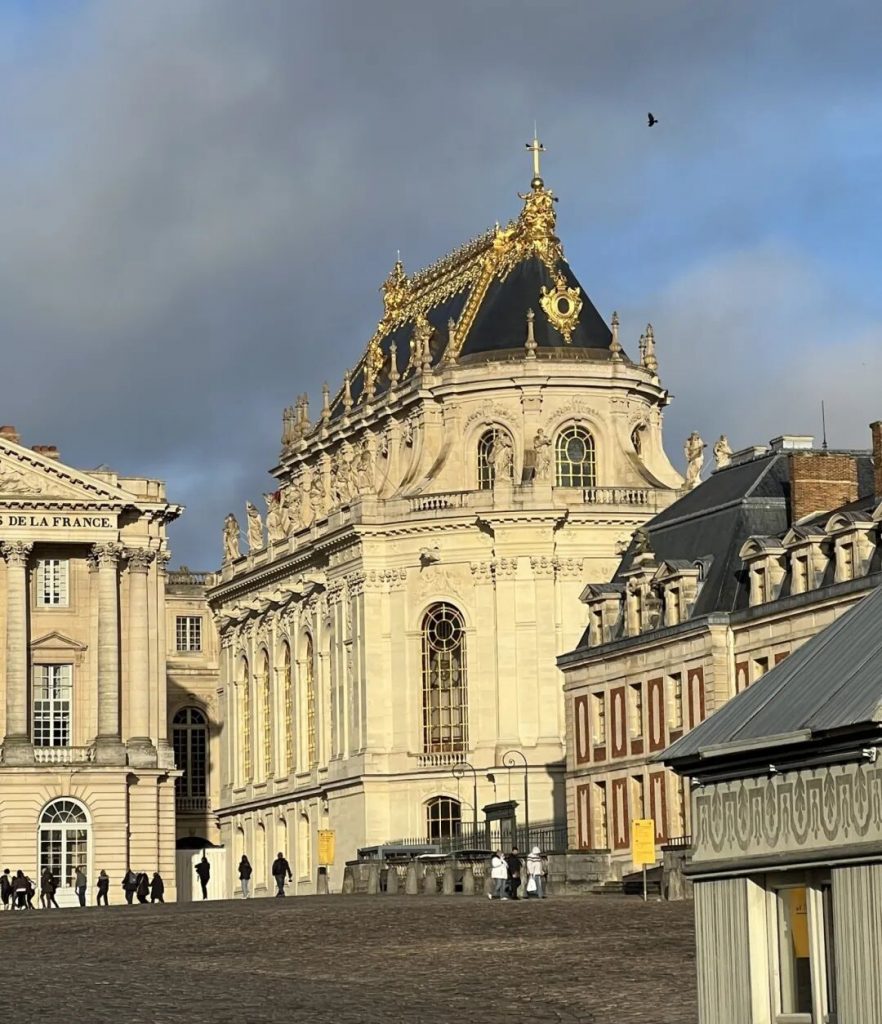
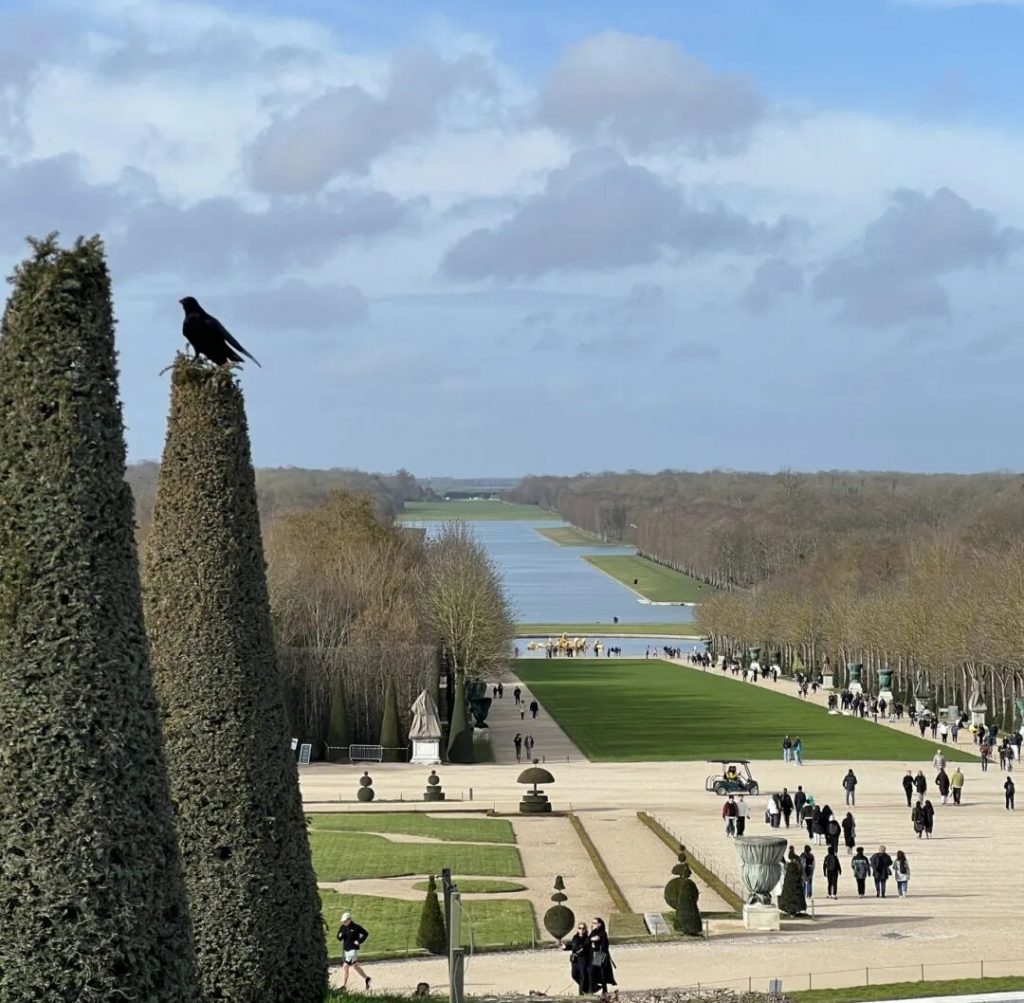
The Palace of Versailles was grand. Imagine if you had to walk through around thirteen rooms to get to your bedchamber; imagine if you had a Hall of Mirrors to tell you how good your clothes looked every day; imagine if you had a garden with seagulls that you can’t even see to the end, never mind walk through. The first room we entered was the Estates-General room, coincidentally, with pictures stretching up to the ceiling, filled with the history of the Estates General from 1302 to 1789.
The rest of the palace was truly a mecca for history students. One can find history here, from the Crusades to the Napoleonic Wars. Tagging along with Mr. McCabe, Richard and I received a brief tutorial about the Crusades in the exhibition hall, which took us two queries and a few hundred turns to find.
It’s winter; the gardens were a bit bare, but the sun, the wind, and the view were still impressive. Seagulls – who knew where they came from – whirled around us, squawking amid the fluttering of wings and feathers.
We took the bus again to our hotel – our driver navigated the narrow streets with impressive skill when it came to manoeuvring a bus, cue our applause – and then headed out on foot for food. I ordered a grand pizza with Irene, and the taste was superb. I was surprised that the world outside the diner was still bright. “Hey, was that lunch?” I looked back over my shoulder and asked. “Yeah, felt like dinner after such long travel, didn’t it?”
We bought numerous bottles of water – there was no kettle in the hotel – and then finally headed back to rest in our comfortable beds. Dinner in the hotel was cold, but the chocolate pudding – callback from Berlin! – was superb. The night concluded with rowdy games of UNO, never-have-I-ever, and most-likely-to.
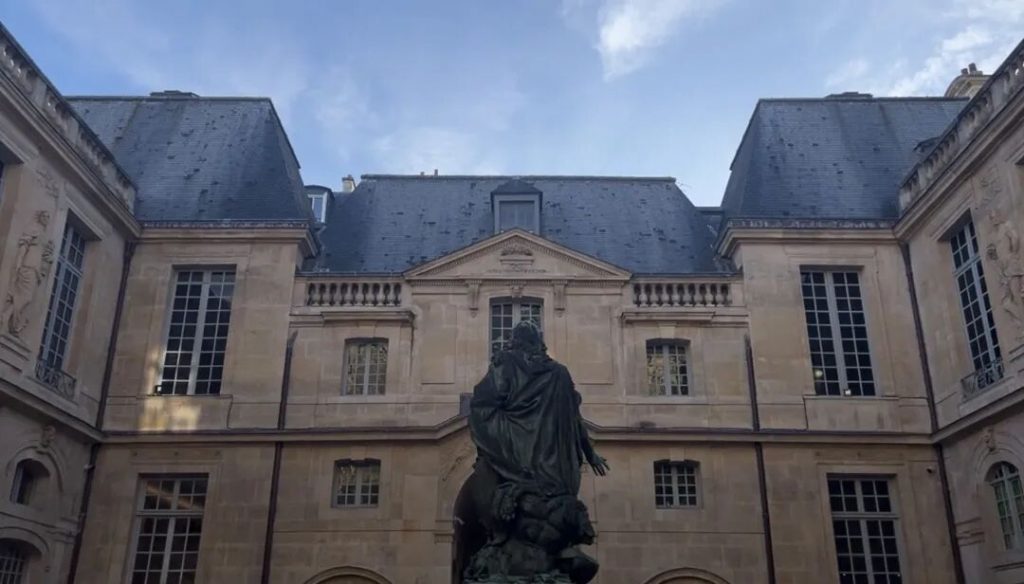
Feb 8 – Musee Carnavalet
I was at the Carnavalet Museum to see the French Revolution exhibit. It held many paintings, documents, and objects we’d only seen in textbooks before: portraits of Marat, Desmoulins, Danton, Robespierre, Saint-Just – even Liszt; famous paintings like the Tennis Court Oath, execution of Louis XVI, Napoleon’s coronation; objects like Saint-Just’s pistol, a piece of Desmoulins’ newspaper Le Vieux Cordelier…
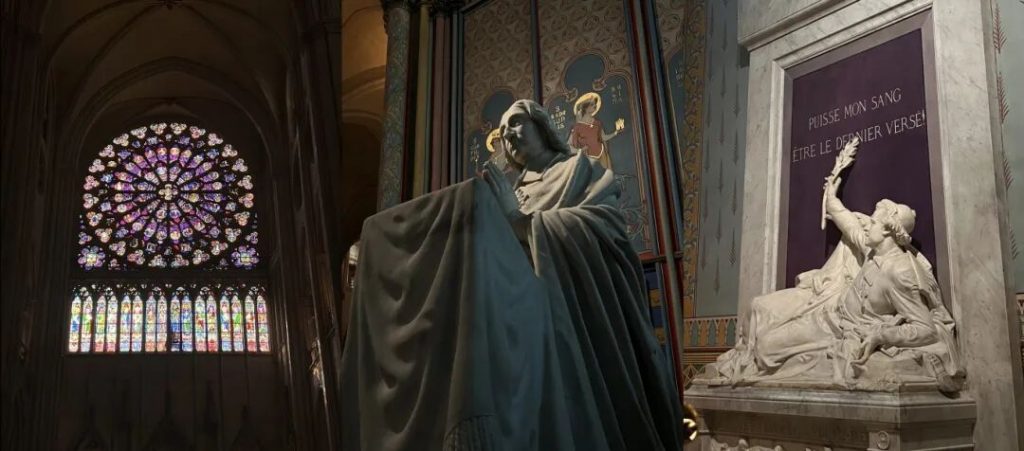
Our next stop – walking through the city and over the bridge to the island in the middle of the city – was Notre Dame de Paris. “Change your playlist,” my friend tapped me on the shoulder, “It’s time to pull out the Notre Dame musical soundtrack!”
I couldn’t help but think back to Saint Vitus’ Church, back in Prague. The stained windows in Notre Dame were larger, its halls wider, and there were more statues on the sides, but the holy sereneness was the same.
Six of us had lunch at a place near Notre Dame. The first floor was full, so we were led to the basement – again, much like what happened in Prague, at that Italian diner, where there was no internet service. The waiter looked bad-tempered, but he was extremely funny – Is that dish for me? Pour moi? (He takes the dish back a bit) Non? (He gives it to me, smiling) Ah – merci! (We all laugh) – After half an hour, we realised that we couldn’t make the boat trip on time – the entrée had taken forty minutes, and who knew how long the desserts would take. I climbed up the steep stairs and breathed out in the sunlight, asked Mr. McCabe if it was possible for us to take the next ferry, turned around anxiously for the reply, received it: do your best to be on time, skid down to the cellar, slid back into my seat, and took a spoonful of Joyce’s tiramisu.
It turned out that instead of 3:45, the boat trip was at 4:00. The six of us arrived, out of breath, puffing and panting, desperate for water, having run the last 100 metres or so.
“What were they screaming about?” I later asked my friend, meaning the kids on the second deck of the ferry.
“There are echoes every time they scream under a bridge,” she replied, “that’s probably the reason.”
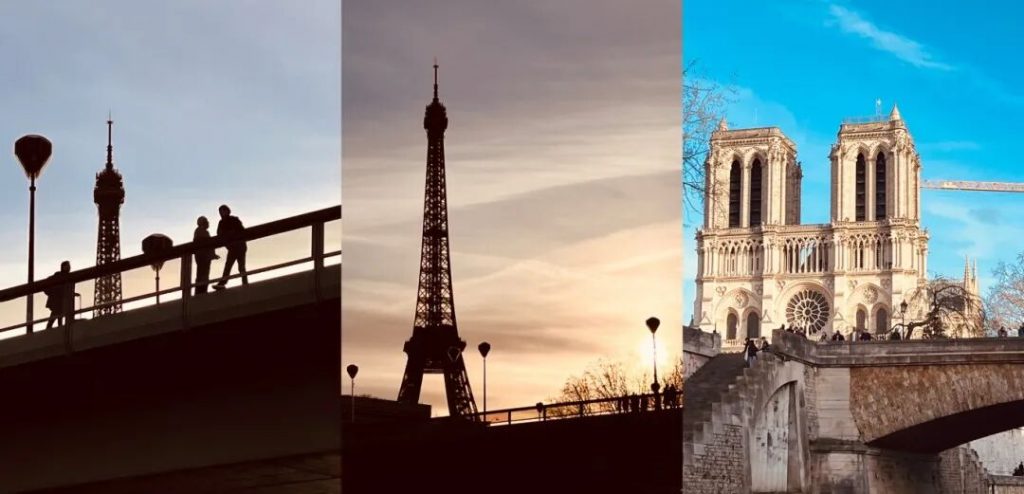
We saw Notre Dame again – side by side with a bright orange crane – “13th century mixed with 21st”. The Eiffel Tower passed us by, standing out resolutely against the orange sun.
Feb 9
First stop – the Eiffel Tower. We took the underground train as usual, and I was two steps from sleep when the train went boom, sparks showered the outside of the window just across from me, and the train lurched to a stop. We sat there and looked at each other. Do we run? I asked. Where to?? Asked Mr. McCabe back. I thought he was totally sensible and left fate to its own course. As the smell of smoke slowly drifted in, the train started to move at a tortoise’s pace towards our destination stop and arrived intact two minutes later. Just outside the train station, in the ice-cold plaza, we commented on how calm the Parisians looked. Was this a normal occurrence?
We had not been able to secure elevator tickets to the top of the Eiffel Tower – and just as well, for it was completely shrouded in mist. The temperature was somewhere below freezing, and I longed for a cup of something warm. Would you like to climb the tower or join us at Galeries Lafayette? I chose the latter without hesitation, and away we went. Hot drinks, a cold lunch, and nice indoor heat cured my poor ears, and in no time, we set out again, taking a detour to see the Palais Garnier opera house on our way to the bus station. A word of warning – if you want to take the bus in Paris, you have to wave to the driver. I waited for two buses to go by – none stopped – and I had to take the metro as a last-minute backup.
In the afternoon came the Revolutionary tour, starting at the Bastille Plaza. Passing through the streets of the 4th Arrondissement, we marched along the same narrow roads where the Revolution had once unfolded. We stopped at Marat’s home, walked past the oldest restaurant in Paris, and followed a street lined with the familiar green boxes of the booksellers along the Seine. The city moved calmly around us—cars rolling past, Parisians chatting, cafés spilling their afternoon crowds onto the pavement—yet it was difficult not to imagine another Paris layered beneath it, louder and more restless, where printing presses clattered, and voices rose in argument over the fate of the Republic.
As we walked further, the sun slowly sank lower behind the buildings, casting long golden lines across the streets and the river. The Louvre appeared briefly between rows of stone houses, its walls glowing faintly in the evening light. Our guide continued speaking, pointing out places where revolutionaries had once lived, where pamphlets had been written, and where crowds had once gathered. The streets themselves were quiet now, but the weight of those stories seemed to linger in the air.
By the time we climbed the final slope and stopped on a hill overlooking the plaza below, our tired feet and aching knees were approaching their limit. The sky had begun to fade into that soft winter color between gold and violet, the kind of light that makes a city seem momentarily suspended between day and night. Standing there, looking out over the rooftops of Paris, it was hard not to feel that the journey had quietly circled back to where it began: the Revolution that had drawn me here in the first place.
In the next few days, a great deal happened. We visited the army museum to see Napoleon’s ashes, ate pizza with a garlic filling, bought milk tea from a nice Chinese lady, spent the whole day at Disneyland, visited the Louvre, and had hot pho. But even as those moments piled up, my mind kept drifting back to that restaurant window where Robespierre’s portrait looked out over the street, seeing the people passing by, with his legacy still remembered in the city. I found myself thinking about the neighborhood where so many of the revolutionaries once lived and argued, the narrow streets where the ideas we now read in textbooks were once spoken aloud.
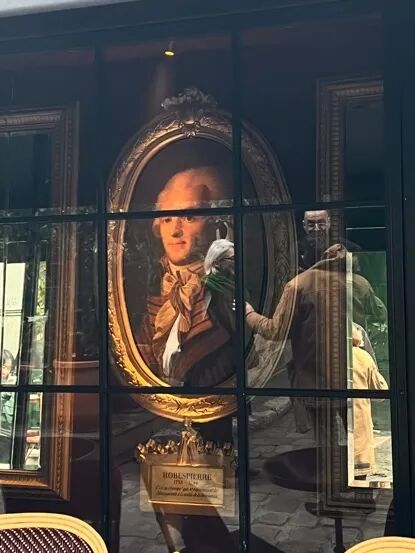
We’d studied the revolutionary tale in class: stories of revolutionaries with ideological backgrounds coming together to protect the Republic; of Marat, Herbert and Desmoulins at work at their printing presses, of Robespierre, Couthon and Danton debating in the Committee of Public Safety, of Carnot, Prieur and Saint-Just leading the charge at the front lines against the monarchies that would see the Republic brought down. It was a moving tour: to know that they once stood in these spots, once shouted with their voices echoing through these narrow streets, once lived in the city of Paris.
And perhaps that is what I will remember most about this trip. Paris offered us many things—great monuments, warm meals, laughter with friends, long days of walking, and even longer nights of games in hotel rooms. Yet for me, the city always seemed to come back to that one story. The Revolution may be only one chapter in the long life of Paris, but it is the chapter that drew me here in the first place. Walking through those streets did not simply feel like visiting history; it felt like briefly stepping into the world where it was made.
- Article / Molly Wang