Editor’s Note:
STEM Racing is an international competition combining engineering design, aerodynamics, project management and business operations. SCIE student team Aspyra turned classroom learning into a real-world project, from car modelling and CFD simulations to a self-built wind tunnel, branding and sponsorship.
In this interview, three team members share their first competition experience, reflecting on the challenges, teamwork and engineering spirit behind their journey.
Question:We are very pleased to have three students with us today. Could you start by introducing your team and the competition you recently took part in?
Evan: Of course. We are a student team called Aspyra, and we compete in STEM Racing. The competition is divided into two equally important parts.
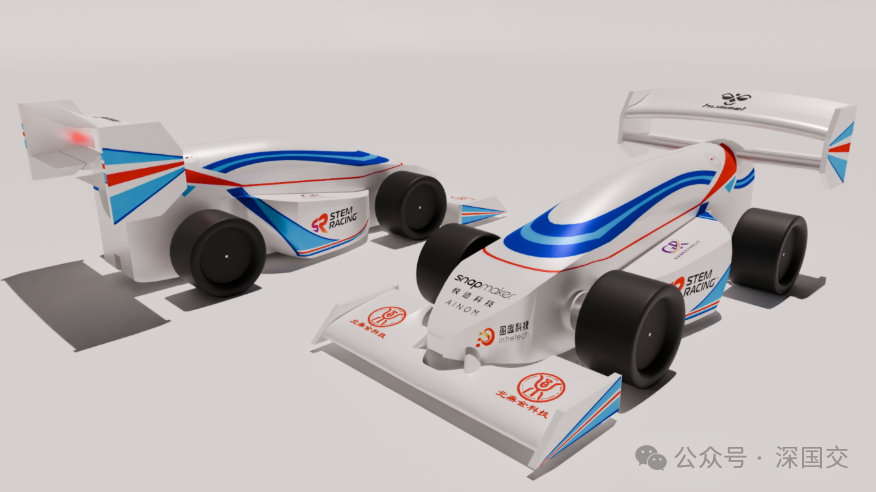
The first is engineering design and car manufacturing. We need to design a small, unpowered car propelled by a CO₂ cartridge. The aim is to reduce drag and resistance as much as possible so that the car can reach the finish line faster.
The second part is business and team operations. We need to find sponsors to support the team, promote ourselves through social media platforms such as Instagram and Xiaohongshu, and raise awareness of both our team and the STEM Racing competition.
Question:Where did you compete most recently, and how did the team perform?
Evan: We competed in the regional round in Hong Kong, alongside sixteen teams. In the racing section, our car ranked around seventh, which placed us in the middle of the field. There is still a lot of room for improvement.
However, we performed very strongly in the business and operations section. There were four awards in this area, and we were shortlisted for three of them. We won first place in the Branding and Packaging award.
Engineering Design: Car Iteration and a Self-Built Wind Tunnel
Question:From a technical perspective, how many versions of the car did you develop, and what guided your design decisions?
Evan:We developed three major versions. The first version was a basic car that met the competition requirements. We then used Computational Fluid Dynamics software to test airflow virtually, identifying areas with high resistance, low pressure or turbulence. This helped us decide where to improve the design.
After that, we made parametric adjustments in the modelling software, changed specific design variables, and then tested the car again digitally.
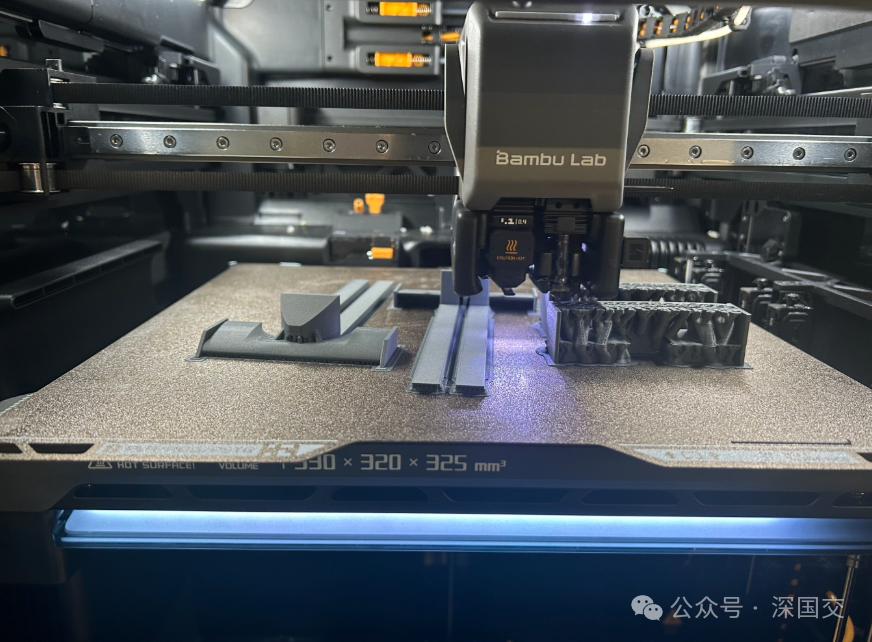
For the second version, we began producing physical parts using 3D printing. We also carried out short-distance CO₂ tests in the engineering classroom to check stability and impact resistance. At the same time, we designed and built our own miniature wind tunnel.
Question:A wind tunnel? That sounds impressive. Where is it, and how did you build it?
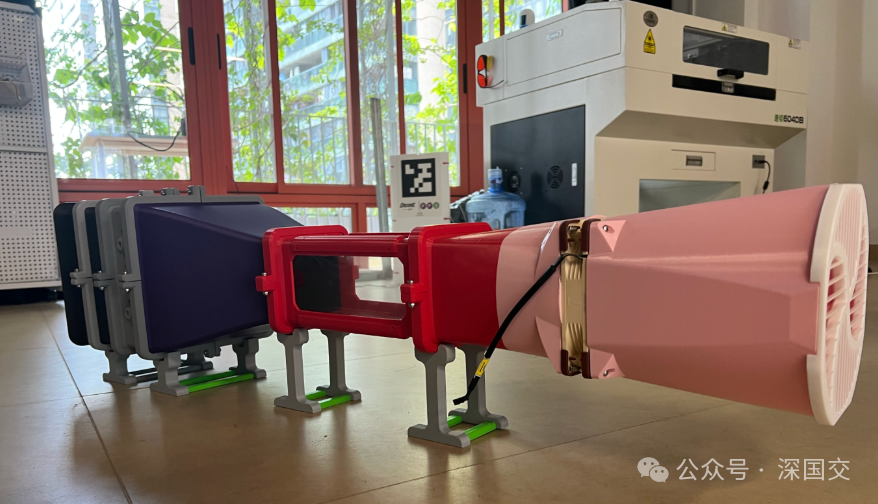
Samson:The wind tunnel is in the engineering classroom on the sixth floor, Room 601. It is a small vertical wind tunnel. We adapted the dimensions from an open-source project online so that it could fit our car model.
Almost the entire wind tunnel was made using 3D printing, and the total cost was under RMB 500.
During testing, we used a smoke machine to generate tiny particles. A fan pulled the airflow through the tunnel, and with lighting, we could observe the streamlines as they passed over the car body. The wind tunnel helped us discover practical manufacturing issues that computer simulations could not fully show, such as whether the surface had been polished smoothly enough or whether the paint finish was complete.
Question:Apart from the wind tunnel, did you make any other tools yourselves?
Evan: Yes. One example is a painting stand. Because our car body has an unusual shape, it is difficult to hold with ordinary clamps. Also, the clamped areas would be blocked and could not be painted properly. So we designed and 3D-printed a small stand to support the car body, which made spray-painting much easier.
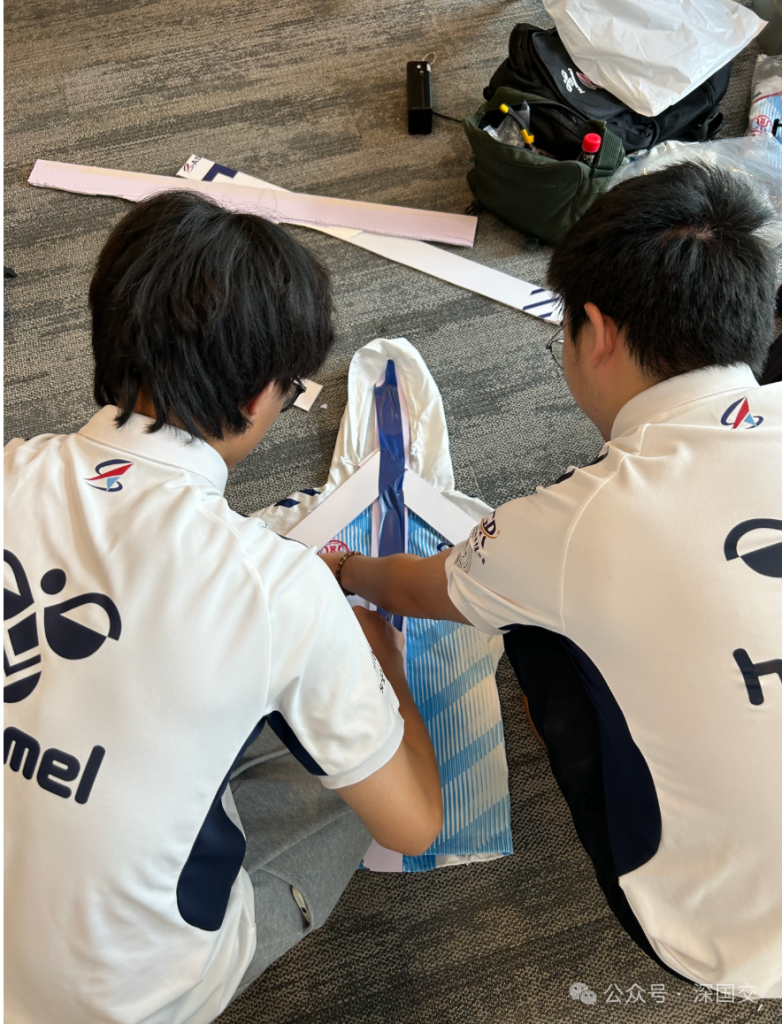
We also made a display stand for our team uniform. Our sponsor provided the team clothing, and we needed to present it professionally at the competition booth. So we built a stand on site using available materials.
These small tools were all designed and made quickly in response to real needs.
Question:It sounds as if you are not just learning 3D printing as a skill, but using it as a practical engineering tool.
Evan: Exactly. Several of us have been exploring different 3D printing techniques since we joined the school, and we have also repaired printers ourselves. So we understand materials, printing parameters and machine settings quite well.
But we do not limit ourselves to 3D printing. If wood or acrylic is more suitable, we use those instead. The key is choosing the right material to solve a real problem.
Reflecting on Aerodynamics and Weight Reduction
Question:Why did the car not perform as well as expected in the racing section?
Samson: There were two main reasons.
First, the competition track was completely different from our normal testing environment. Proper race tracks are very difficult to access in China, as they usually need to be ordered from the UK or the US, which is a complicated process. Before the competition, we had no opportunity to test on the actual track.
During the race, part of our chassis rubbed against the track’s tether guide, creating extra resistance and slowing the car down.
Second, our design strategy was not ideal. We focused too much on downforce because we were worried the car might lift off the track. In reality, this is a straight-line acceleration race, so weight reduction is even more important. According to Newton’s second law, acceleration depends on the driving force divided by mass.
Many other teams tried very hard to reduce weight, and some even pushed the rules slightly to gain speed. As first-time competitors, we thought we had to follow every rule very strictly, so our car ended up being much heavier than others. It was a valuable lesson.
Business Operations: Sponsorship and Co-Creation
Question:Jason, you were responsible for the business side. If I were a judge, how would you introduce your team in two or three minutes?
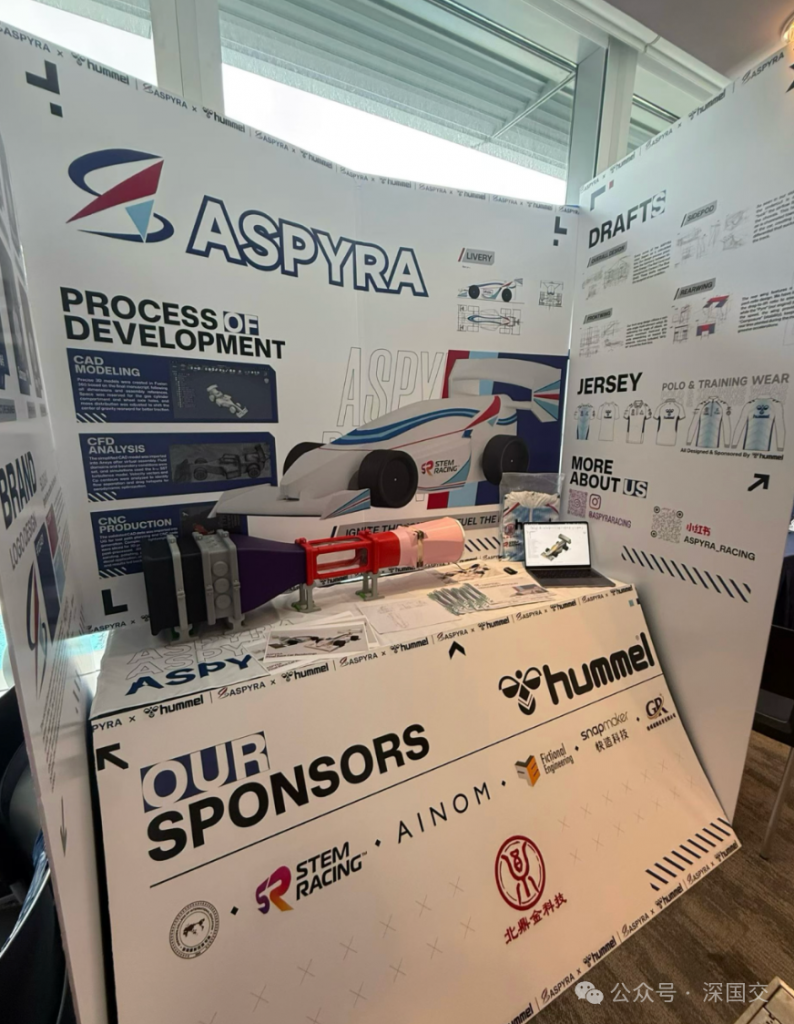
Jason: I would begin with our visual identity. Our car has a striking colour scheme of red, blue and white, inspired by the classic Martini livery, which is well known in Formula One and endurance racing. Our booth, logo and uniforms were all designed around this consistent colour scheme.
Then I would explain who we are. We are a student team from Shenzhen, and all six members are from SCIE. Unlike many other teams, we do not have an external organisation behind us. We travelled two hours to the competition ourselves, found our own sponsors and even bought our own 3D printer. We represent the innovative spirit of young people in the Greater Bay Area.
I would then explain how we work with sponsors. We do not simply ask for money; we aim for co-creation.
For example, Hemel sponsored our uniforms, shoes and bags. We first created the initial design, then worked with their professional designers to finalise the products.
Snapmaker, a 3D printing company based in Shenzhen, sponsored our machine. In return, we provided feedback on issues we encountered and suggestions for improvement, creating a genuine technical collaboration.
Another sponsor, Beidingjin Technology, a technology investment company, provided around RMB 10,000 to 30,000 in financial support, mainly for materials, travel and manufacturing costs.
Question:How did you contact these sponsors?
Jason: We used several methods. Some companies were contacted directly through their official websites by email. Others were reached through social media or offline communication.
We first identified what resources we needed, then looked for companies that could provide those resources and shared similar values. It was time-consuming, but it was also one of the most valuable parts of the whole experience.
Question:Did you try applying for funding from government or institutional organisations?
Jason: Yes. I contacted several educational and technology organisations in Macau. However, they were more inclined to support teams where the whole school was based in Macau. Since I was the only Macau member in our team, the applications were not successful.
But this actually became a strength in our presentation to the judges. We could show that we were a genuinely student-led team, without external institutional support. Every step was explored and completed by ourselves.
Challenges, Time and Team Growth
Question: What was the biggest challenge throughout the process?
Evan: The biggest challenge was time management. Our preparation period overlapped with IGCSE and international exams. During the mock exam period, I was also writing the Enterprise Portfolio, so the schedule was extremely tight.
As team leader, I had to list every member’s exam timetable, identify the gaps when no one had exams, and then arrange tasks and meetings accordingly. We used Feishu and WeChat for communication, and calendars to track progress.
We also had to learn how to deal with setbacks. On the morning of the competition, our car did not race as well as we had hoped, and we were all quite disappointed during lunch. But we quickly adjusted our mindset and focused on preparing for the afternoon presentation.
Each of us worked on different parts of the outline, reviewed the portfolio, and prepared for questions. In the end, the presentation went very well and earned us nominations. At that moment, it felt as if all the effort had been worthwhile.
Jason:For me, the biggest gain was experiencing what real teamwork should feel like. In some competitions I had joined before, some people did more, some did less, and sometimes people held the team back.
This time, everyone had a clear role and supported one another. I even felt at times that I was the one slowing the team down, but my teammates were incredibly reliable. That trust came from the fact that most of us often work together on engineering projects and spend a lot of time in the engineering classroom. We know each other very well.
Samson: What I learnt most was the importance of studying the rules carefully. My first design version was based on the wrong category rules because I had referred to materials from a different competition rather than STEM Racing itself.
After that, I reread the official rulebook and revised everything. In the end, our Engineering Portfolio was still shortlisted. So making mistakes is not the problem. The important thing is to learn from them.
Looking Ahead
Question: Will you continue competing next year?
Evan: We would all like to continue. This was our first time entering the competition, and we lacked experience, but we have learnt a great deal. If the timing works and does not clash with international exams, we hope to compete in the regional round again next year, and we are confident we can achieve better results.
There is one practical issue: the competition has an age limit, and participants must be under eighteen. Some of our members will turn eighteen next year, so we may only be able to compete one more time. Even so, we hope to pass on our experience to younger SCIE students.
Question: Is there anything else you would like to add?
Evan: What I find most exciting about this competition is how perfectly it combines engineering and business. Just like Formula One, it is not only about speed. It is also about branding, operations and project management.
It allowed us to apply what we learn at school — physics, mathematics, computer science, economics and more — to a real project.
I also want to highlight our miniature wind tunnel. At the competition, many teachers and students from other teams came to look at it because we did not buy a ready-made one. We designed it ourselves and 3D-printed it in our school’s engineering classroom.
That is something we are very proud of, and it reflects the engineering spirit of our team.
- Article / Mr. Shawn